Vision impairment can affect how individuals see, move, and interact with their surroundings, but the right support can restore confidence and independence.
Help at Hand Support, a Registered NDIS Provider, delivers structured NDIS-funded vision impairment support services that help participants build daily-living skills, mobility, and inclusion.
Each plan follows the NDIS Act 2013 and the 2026 NDIS Quality and Safeguards Framework, ensuring consistency, safety, and measurable progress.
What Is Vision Impairment Support Under the NDIS?
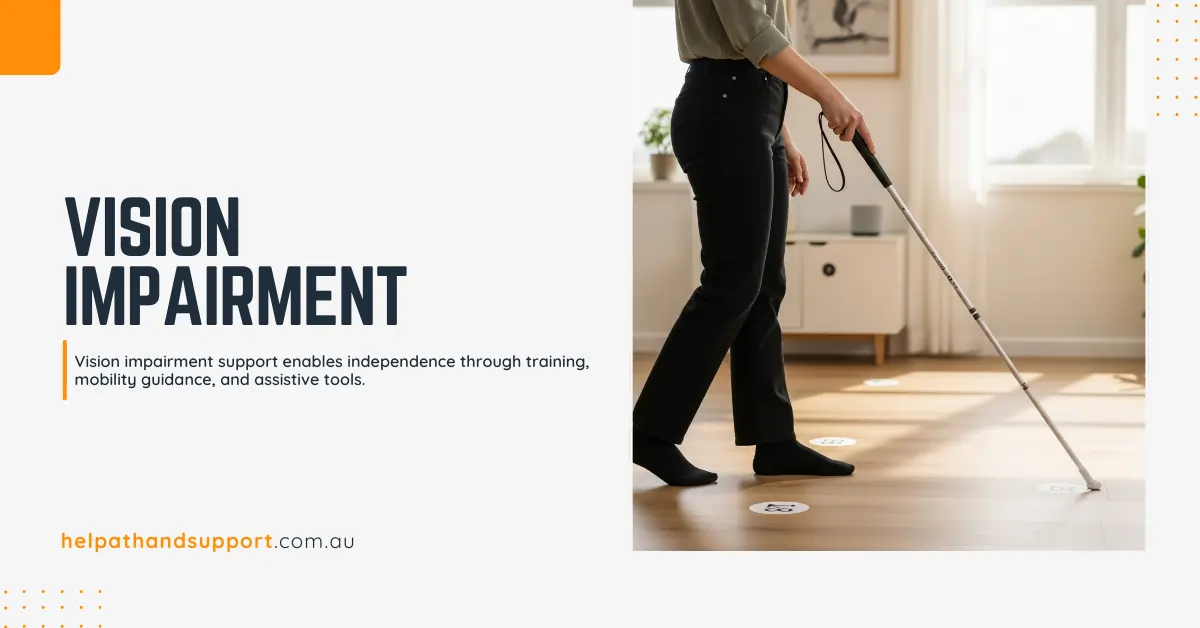
Vision impairment support helps participants maintain independence by combining personal assistance, sensory training, and environmental accessibility.
Help at Hand Support develops plans that include functional vision assessment, orientation training, and assistive technology education to help participants navigate safely at home and in the community.
Vision impairment affects more than sight; it influences confidence, navigation, and participation. Structured supports address each of these real-world needs through adaptive methods.

What Services Are Included in Vision Impairment Support Services?
Vision impairment support services are tailored to each participant’s level of vision, goals, and daily-living needs. These NDIS-funded supports are designed to promote confidence, safety, and independence across home, work, and community settings.
The key service types available are listed below.
- Daily-living support for personal care, meal preparation, and home organisation.
- Mobility and orientation training using white cane techniques, route familiarisation, and safe navigation strategies.
- Assistive technology setup, including screen-reading software, electronic magnifiers, and Braille devices.
- Environmental adjustments such as lighting optimisation, tactile labelling, and hazard prevention measures.
- Community participation support to enable education, recreation, and employment inclusion.
- Peer and emotional support that strengthens confidence, communication, and social engagement.
Each service is delivered by qualified NDIS support workers to help participants achieve greater independence and long-term self-reliance.
How Help at Hand Support Assists People with Vision Impairment
Help at Hand Support combines daily-living training, technology support, and environmental modification to build independence.
Plans are co-designed with participants, families, and Orientation & Mobility Specialists in alignment with best practice from Vision Australia and Guide Dogs Australia.
Progress is tracked through ongoing functional reviews and goal updates.

Why Do Participants Choose Help at Hand Support for Vision Impairment Care?
Participants choose Help at Hand Support because every service is delivered by a registered NDIS Provider with a qualified team and measurable results.
We focus on person-centred care, accessibility, and independence.
The main reasons participants trust Help at Hand Support are listed below.
- Experienced NDIS support workers trained in low-vision and sensory assistance.
- Individualised support plans aligned with NDIS Core Supports and Capacity Building goals.
- Transparent progress tracking with regular updates and family involvement.
- Flexible scheduling and delivery options for in-home and community-based support.
Each service is designed to ensure safety, consistency, and positive outcomes for participants living with vision impairment.

What Are the Most Common Supports for Vision Impairment Participants?
Common supports for vision impairment focus on improving independence, mobility, and confidence in daily life. These supports help participants navigate safely, complete personal tasks, and engage with their surroundings.
The most common types of NDIS-funded supports are listed below.
- Safe navigation training using a white cane, mobility aids, and route familiarisation techniques.
- Personal hygiene and grooming routines are designed to maintain safety and dignity.
- Cooking and kitchen organisation with tactile indicators, heat awareness, and clear spatial layout.
- Reading and Braille literacy development is supported by audio readers, magnifiers, and adaptive devices.
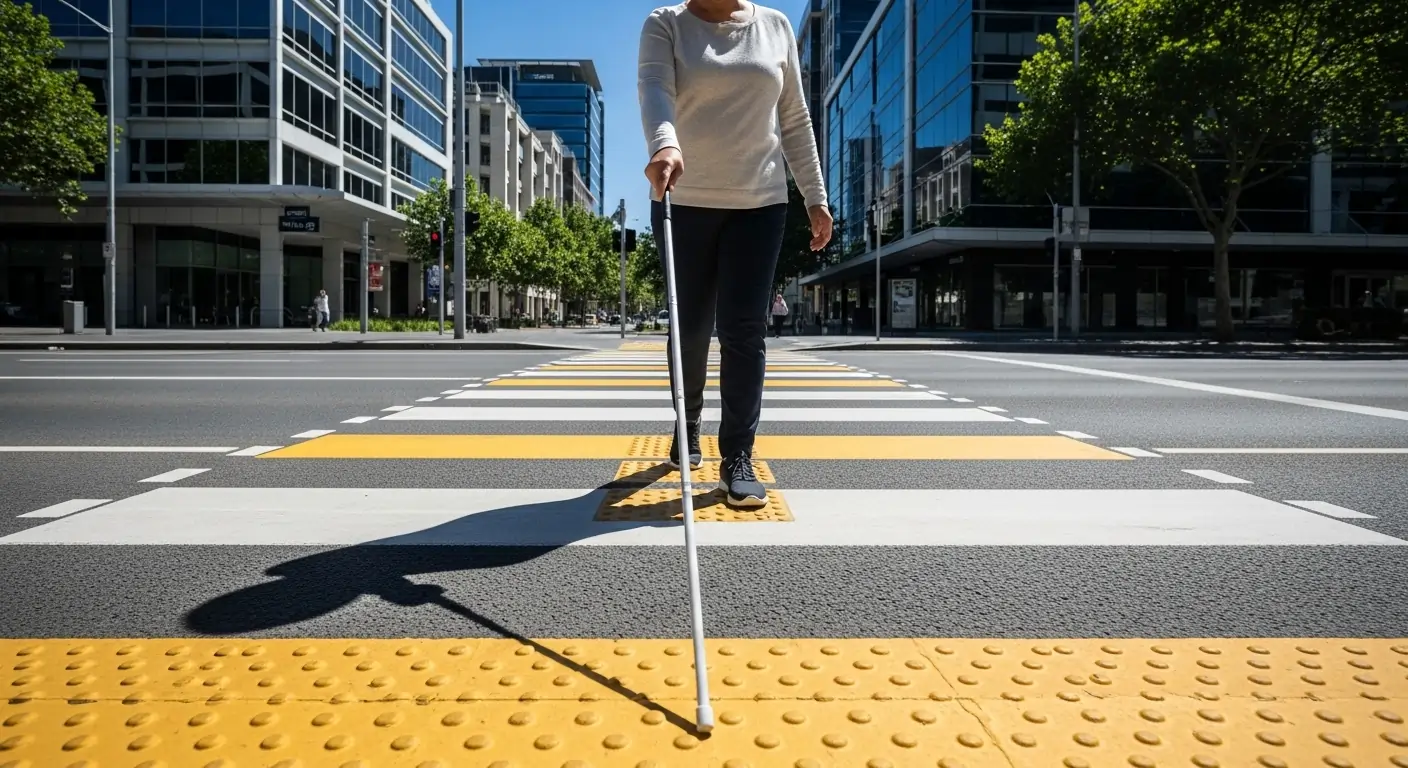
- Travel and transport orientation to build confidence using public transport and tactile ground surfaces.
- Home safety modifications, including lighting optimisation, tactile labelling, and hazard prevention.
Each of these structured supports strengthens daily-living skills and helps participants achieve greater independence under the NDIS.
Book Vision Impairment Support with Help at Hand Support
Help at Hand Support provides trusted NDIS-funded vision impairment plans that combine daily living training and assistive technology for lasting independence.
FAQs
What is NDIS vision impairment support?
It is funded assistance that helps participants manage daily life, mobility, and communication through trained support workers and adaptive tools.
Does NDIS cover low vision and blindness?
Yes, NDIS supports participants whose vision loss affects functional capacity or daily independence.
Can support workers help set up assistive technology?
Yes, they train participants on devices such as screen readers, Braille keyboards, and voice-activated assistants.
Are guide dog and mobility programs funded?
Yes, if identified as reasonable and necessary within the participant’s plan.
Is Help at Hand Support available nationwide?
Yes, services operate across Australia through local support teams.
Can families be included in support plans?
Yes, family members can receive training to extend support at home.
Is assistive equipment funded?
Yes, under the Assistive Technology and Core Supports categories.
Are annual plan reviews required?
Yes, plans are reviewed yearly to measure progress and update goals.
How Vision Impairment Support Connects with Community Access Services
Community access is an essential part of building confidence for participants with low vision or blindness.
Through structured orientation and mobility training, participants learn safe travel skills, social interaction, and route familiarisation using aids such as white canes, assistive technology, and public transport accessibility tools.
Help at Hand Support extends this independence through Community Access Services, enabling participants to engage in local activities, connect with peers, and strengthen real-world communication skills in line with our NDIS Capacity Building goals.
Help at Hand Support provides structured, NDIS-funded support for people living with vision impairment, focusing on daily living, mobility training, and assistive technology use.
Consistent, goal-focused support helps participants improve independence, build confidence, and enhance safety in both home and community environments.