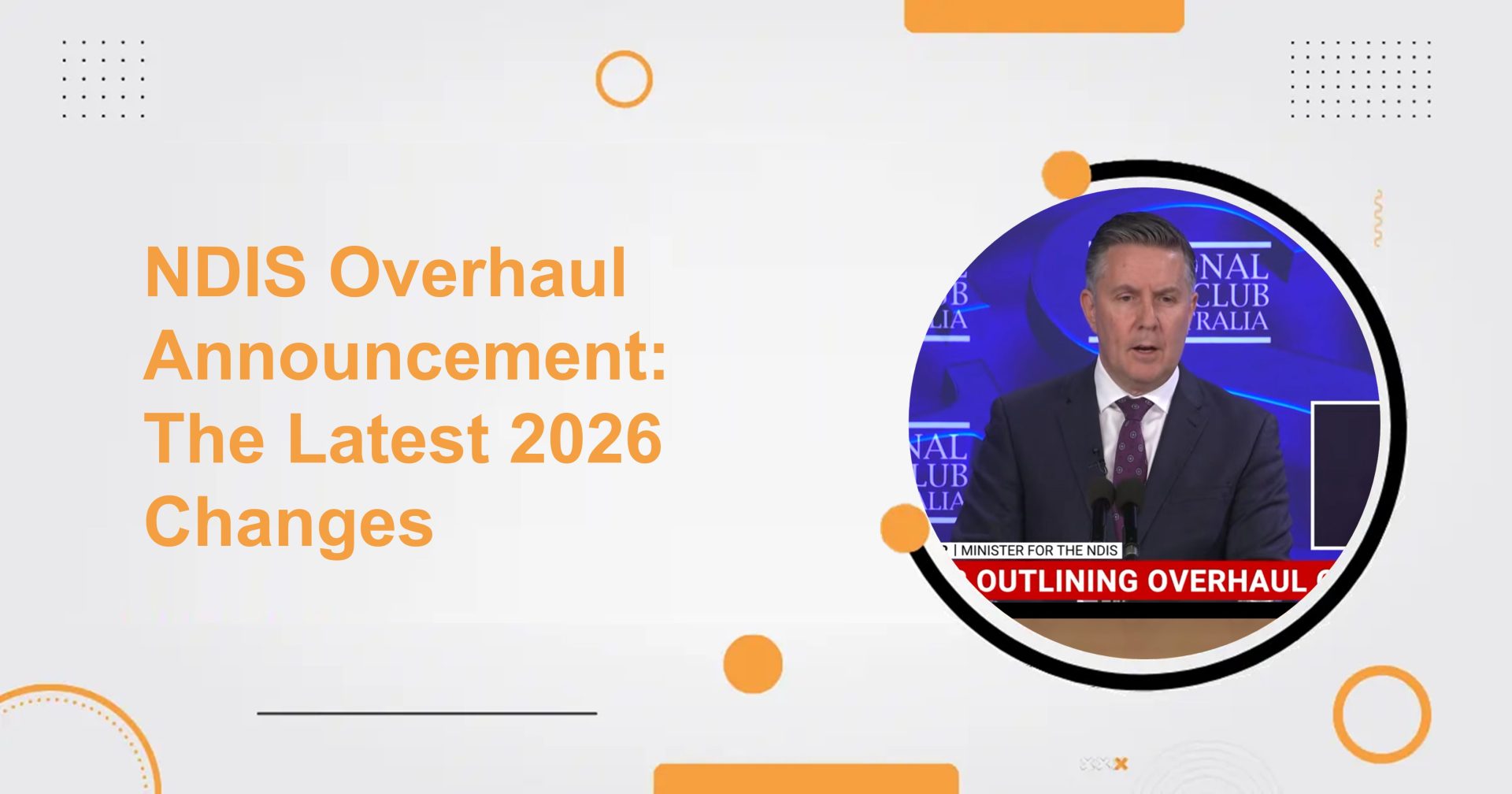
Today, Federal Health and NDIS Minister Mark Butler took to the National Press Club podium and delivered the most significant overhaul to the National Disability Insurance Scheme since its inception in 2013. The changes are sweeping, consequential, and — for those of us working inside the sector every day — demand careful attention.
Here’s what was announced, what it means, and what we at Help at Hand Support Services are watching closely.
Why Is This Happening?
The short answer: the numbers have become unsustainable.
The NDIS is currently a $50 billion per year scheme, growing at 10 per cent annually. The scheme’s actuary has advised the government that it is on track to blow out by $13 billion over the next four years. Without intervention, the projected spend by 2030 was heading toward $70 billion.
“We can’t afford for the NDIS to continue growing at its present rate, but far more importantly, we can’t afford for the NDIS to fail.” — Minister Mark Butler
That framing matters. This is not a government walking away from the scheme — it’s one arguing it must be reformed to survive.
The Key Changes Announced Today
- Tighter Eligibility and Functional Capacity Assessments
Standardised, evidence-based assessments of a person’s functional capacity will be introduced to determine access to the scheme. The Minister acknowledged that the NDIS has expanded well beyond its original design intent to cover many Australians with less significant support needs.
The changes are expected to result in approximately 160,000 participants being moved off the NDIS, with those most likely affected being people with autism or developmental delays who have lower measured support needs.
This is one of the most contested aspects of the announcement. The question of what constitutes “lower support needs” will be central to the implementation debate in the months ahead. - Lower Average Plan Costs
The government has announced that average plan costs will be brought down to $26,000 per year, from $31,000 in 2026 — returning plan spend to levels seen in 2023.
Spending growth will be reduced to two per cent annually over the next four years, before returning to five per cent from 2030 onwards. This is a significant step down from the previous target of eight per cent growth. - Expanded Mandatory Provider Registration
From 1 July 2026, the categories for mandatory registration will be expanded so that more providers are required to be registered. Currently, approximately 93 per cent of NDIS service providers in Australia are unregistered — a market condition that has enabled widespread fraud and quality failures.
Mandatory registration will specifically be expanded to include those delivering higher-risk support activities, such as personal care. As the Minister stated plainly: “Not every provider needs to be fully registered; we don’t need to monitor retail purchases from a chemist the same way we monitor personal care of vulnerable people.”
For registered providers like Help at Hand Support Services, this is a long-overdue levelling of the playing field that will protect participants and reward quality operators. - A New Digital Payment System to Combat Fraud
The government will enroll providers in a new digital payment system. Providers will need to register themselves and provide evidence of their work before being paid. This is a direct response to the alarming scale of fraud the scheme has experienced.
The Australian Criminal Intelligence Commission recently confirmed to parliament that organised crime and professional fraud syndicates have infiltrated the scheme — with funds detected being used for large cash withdrawals, asset purchases, and kickbacks to participants or their families, some of whom were unaware or coerced. - A 30% Cut to Third-Party Intermediary Spending
Spending on third-party intermediaries will be cut by 30 per cent. Quality providers will be shortlisted for clients to choose from, signalling a shift toward curated provider markets and reducing the layers of coordination sitting between participants and direct service delivery. - A $200 Million Community Sector Capability Fund
A $200 million fund will be established to rebuild capability in the disability sector among community organisations — a recognition that mainstream and community services need to be strengthened to support people who may no longer qualify for the NDIS under the tighter eligibility criteria.
The Bigger Picture: Fiscal Targets
The combined changes are projected to save taxpayers $15 billion a year by 2030, cutting annual scheme growth from 10 per cent down to 5 per cent and reducing projected spend from $70 billion to approximately $55 billion.
The savings will also fund other social priorities, including aged care reforms — with the government committing $1 billion to ensure older Australians no longer face out-of-pocket costs for basic personal care services such as showering and dressing.
What This Means for Participants and Providers
For Participants
The immediate questions are about eligibility. If you or someone you support is currently on the NDIS with an autism or developmental delay diagnosis and lower measured support needs, the new functional capacity assessment framework may directly affect plan continuation.
We strongly recommend engaging with your Support Coordinator now to understand your current position and prepare for any reassessment process.
For Providers
The expansion of mandatory registration is something the quality end of the sector has advocated for. It creates accountability, raises the bar, and ultimately protects participants from unsafe, unaccountable operators. Registered providers who meet NDIS Practice Standards are well positioned as the government moves toward curated quality shortlists.
The new digital payment system will require administrative adaptation but should, in the medium term, reduce fraud-related pressure on the sector and improve confidence across the board.
Our View
The NDIS was built on a profound commitment: that Australians living with significant disability deserve tailored, individualised support to live full and meaningful lives.
What has changed is the framework around sustainability, eligibility, and provider accountability. Some of these changes are overdue — particularly around provider registration and fraud prevention. Others, particularly around participant eligibility, will require careful, compassionate implementation to avoid harm to vulnerable people.
At Help at Hand Support Services, we will be closely monitoring the implementation details as they emerge and will continue to provide our participants with the highest quality, NDIS-registered support across all our service areas.
If you have questions about how today’s announcement may affect your plan or your services with us, please don’t hesitate to reach out to our team.

Check out more from our Blog


Book A Care Consult
We will be in contact with you shortly