Help at Hand Support provides structured, NDIS-funded support work for people living with Motor Neuron Disease (MND), focused on daily living assistance, mobility support, communication help, and routine management.
Each service is delivered by trained, insured, and police-checked support workers who understand the effects of neuromuscular decline, progressive muscle weakness, and fatigue.
Our approach is practical and compassionate, helping participants maintain comfort, safety, and participation at home and in the community.
What Is Motor Neuron Disease and How Does It Affect Daily Living?
Motor Neuron Disease (MND) is a progressive neurological condition that affects the nerve cells controlling voluntary muscle movement.
Over time, it can reduce strength, coordination, and speech clarity, impacting the ability to complete everyday tasks independently.
People with MND often require goal-aligned daily living support to manage fatigue, maintain personal safety, and continue participating in meaningful routines.
What Does Motor Neuron Disease Support Work Include?
Motor Neuron Disease support work focuses on practical, hands-on assistance with tasks that become difficult as motor control and strength decline.
Support workers assist with:
- Personal care routines such as dressing, grooming, and meal preparation.
- Safe manual handling, transfers, and positioning to prevent strain or injury.
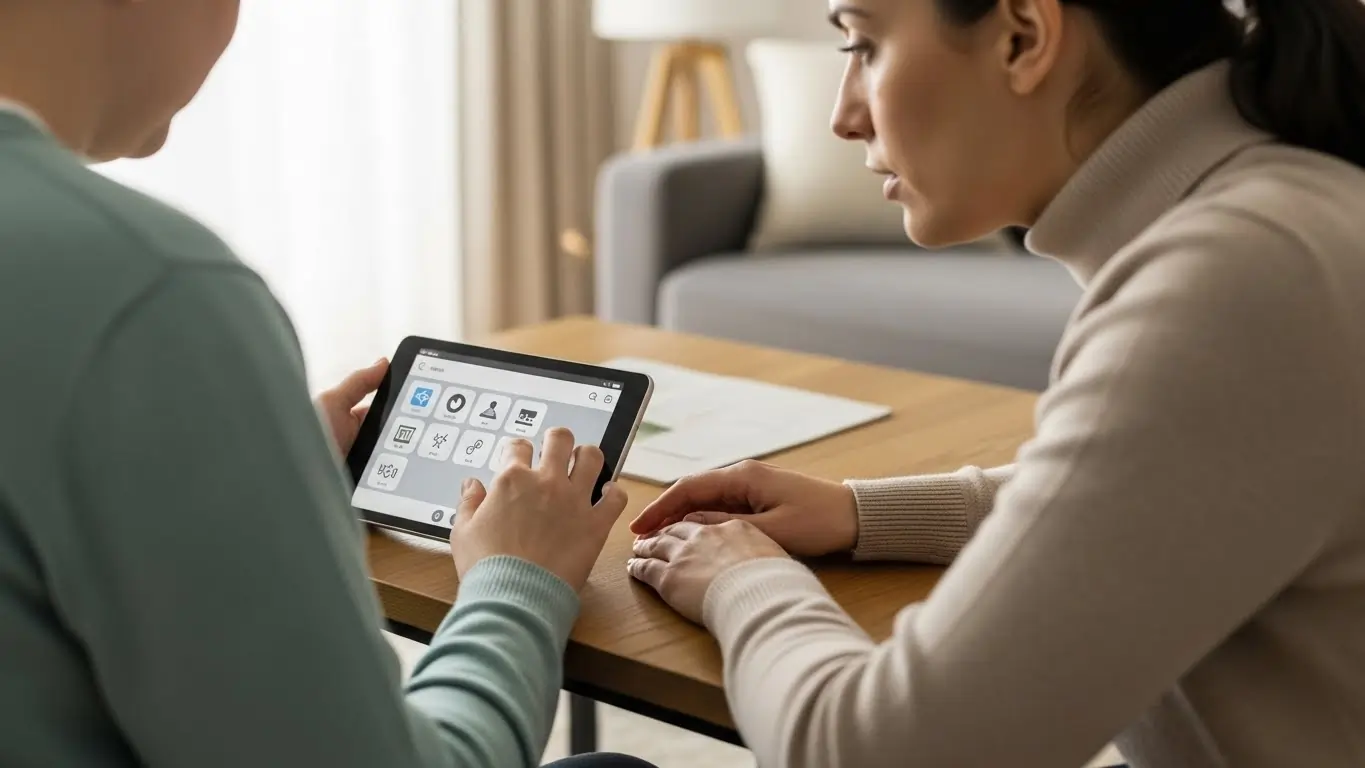
- Communication support for participants experiencing speech or movement challenges.
- Structured routines to conserve energy and manage fatigue.
- Environmental safety checks to prevent falls or mobility-related hazards.
Daily Living and Personal Care Support
Daily living assistance is designed to preserve independence and ensure safety.
Support workers provide predictable help with hygiene, meal preparation, and household organisation, constantly pacing tasks to match each participant’s physical capacity.
This approach supports comfort, consistency, and quality of life across changing stages of Motor Neuron Disease.
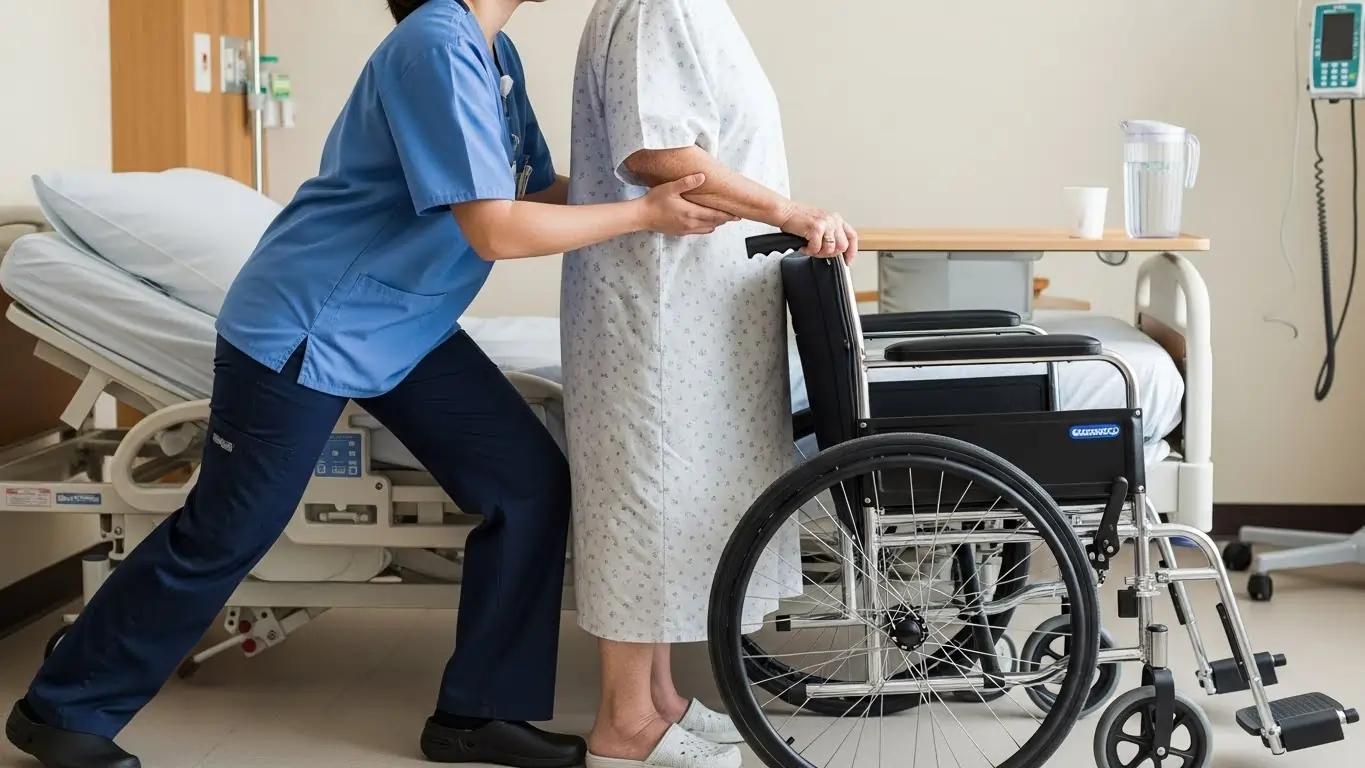
Mobility, Transfers, and Physical Assistance
MND affects muscle coordination, balance, and mobility, making physical support a vital component of care.
Support workers are trained in safe manual handling techniques to assist with transfers, repositioning, and ambulation.
Our trained support workers use proper body mechanics to ensure the safety of both participants and support staff.
This structured mobility support helps reduce fatigue, improve comfort, and prevent falls.
Communication and Routine Management
As MND progresses, speech and fine motor skills may decline. Our support workers assist participants with communication tools, pacing, and structured routines that reduce effort during the day.
Predictable scheduling helps participants maintain control and familiarity while adapting to changing physical needs.
Community Participation and Social Engagement
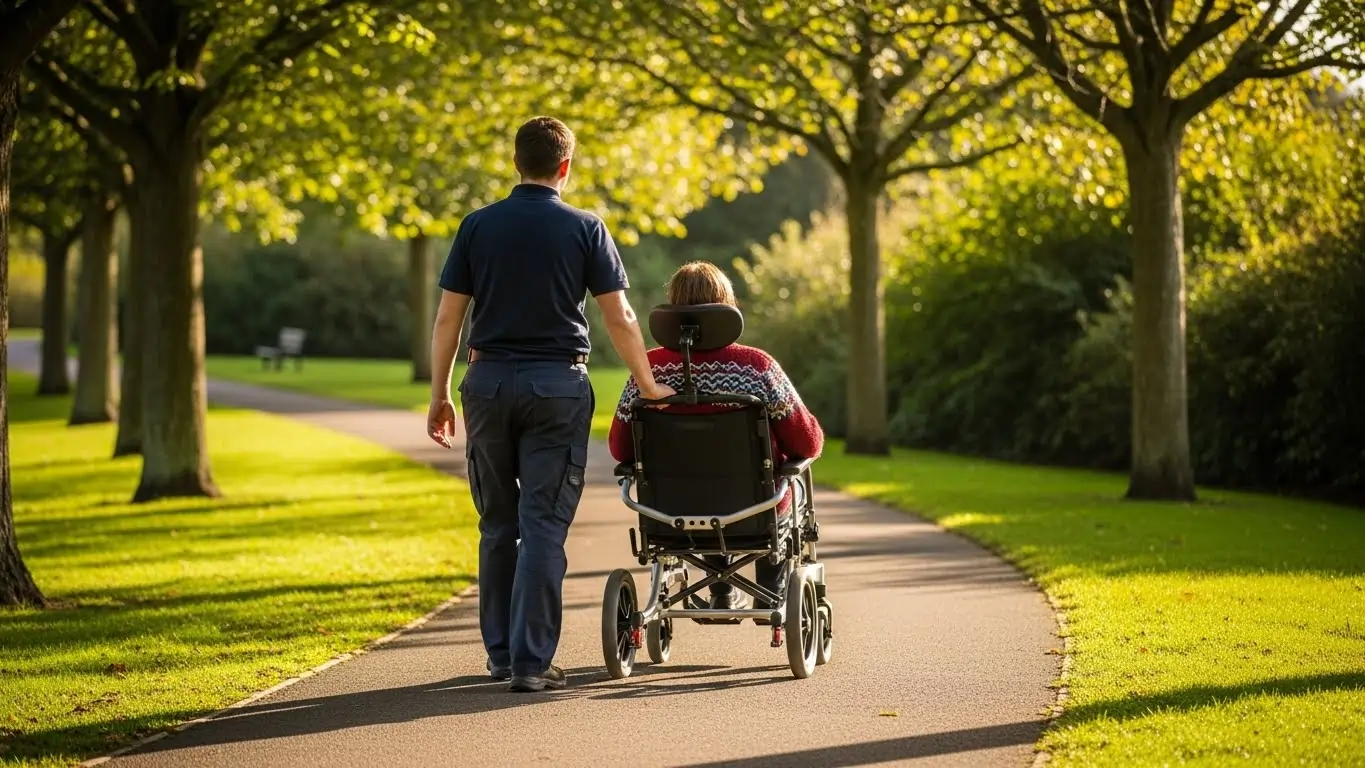
Community participation remains essential for mental and emotional well-being.
Help at Hand Support provides safe, accessible assistance for outings, appointments, and social interaction aligned with NDIS goals.
All activities are planned with fatigue monitoring and mobility safety in mind to prevent exhaustion and maintain confidence outside the home.
Adapting Support as MND Progresses
Motor Neuron Disease evolves across early, moderate, and advanced stages, each requiring different levels of support.
Help at Hand Support adapts service delivery by:
- Increasing hands-on assistance as mobility decreases.
- Adjusting routines to match fatigue and energy levels.
- Maintaining familiar workers for continuity and reassurance.
This adaptive model ensures comfort, dignity, and stability as the condition progresses.
Compliance and Safety Standards
All services comply with the NDIS Quality and Safeguards Commission guidelines and industry standards for participant safety, manual handling, and service delivery.
Support workers adhere to NDIS Practice Standards, ensuring assistance is safe, respectful, and aligned with individual NDIS plans.
Why Families Choose Help at Hand Support
Families choose Help at Hand Support for:
- Reliable, NDIS-compliant care from trained and police-checked staff.
- Goal-aligned support plans tailored to individual needs.
- Clear communication and ongoing progress reporting.
- Consistency and familiarity in day-to-day routines.
Each service is built to deliver real outcomes that support independence, participation, and peace of mind.
Who the Motor Neuron Disease Support Service Is For
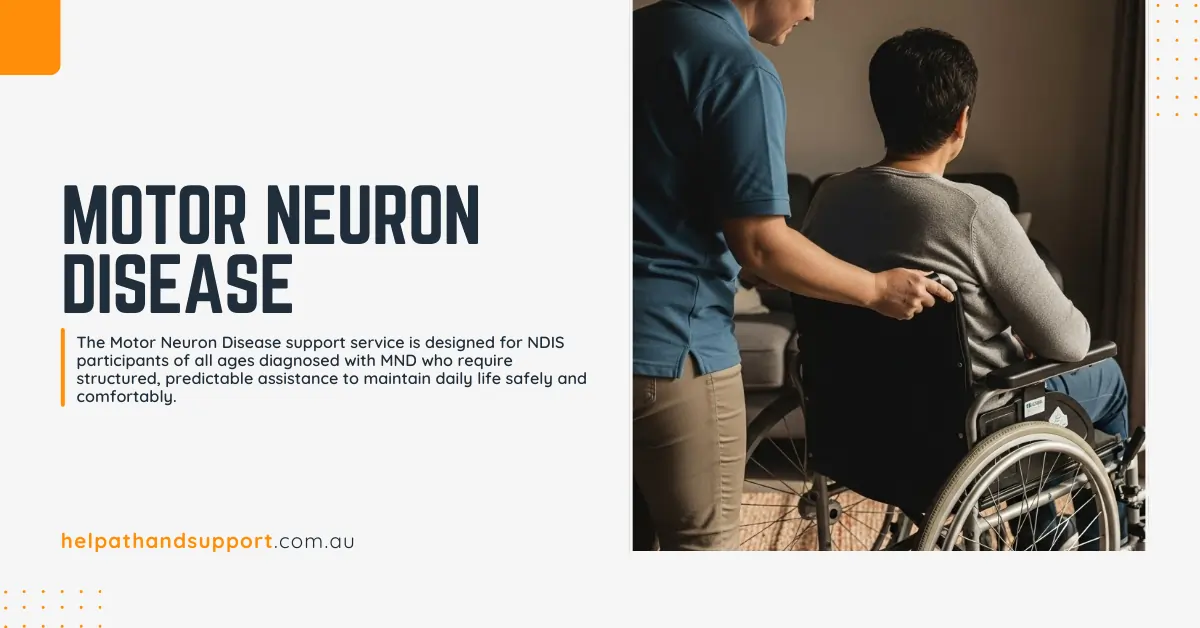
The Motor Neuron Disease support service is designed for NDIS participants of all ages diagnosed with MND who require structured, predictable assistance to maintain daily life safely and comfortably.
It suits individuals experiencing fatigue, mobility limitations, or speech difficulties, as well as families seeking a dependable, respectful support partner.
Accessing Motor Neuron Disease Support Through the NDIS
Motor Neuron Disease support work is typically funded under Core Supports – Assistance with Daily Living.
Help at Hand Support works with participants and families to ensure services align with participants’ goals and meet regulatory requirements under the NDIS Quality and Safeguards Framework.
Key Outcomes of MND Support Work
Motor Neuron Disease support work helps participants:
- Maintain safety and independence within physical limits.
- Manage fatigue and daily routines effectively.
- Preserve dignity and participation as the condition progresses.
- Achieve continuity of care through structured, consistent service delivery.
Families benefit from clear communication, goal tracking, and predictable support delivery.
Who Is the Motor Neuron Disease Support Work Service For?
The Motor Neuron Disease support work service is designed for NDIS participants living with Motor Neuron Disease who experience muscle weakness, reduced mobility, or communication difficulties and need consistent, hands-on assistance with everyday activities.
It is particularly suitable for individuals and families seeking structured, long-term support from qualified NDIS providers that prioritise stability, safety, and reliable care delivery throughout all stages of the condition.
Talk to Help at Hand Support
If you or someone you care for has Motor Neuron Disease (MND), practical, NDIS-funded daily assistance can make a difference.
Call 1300 822 190 or visit the Contact Us page to discuss tailored support options.
Hands-on help from trained support workers ensures daily stability, safety, and confidence throughout every stage of MND.
Frequently Asked Questions
What does NDIS-funded MND support include?
It includes personal care, household help, mobility support, and community access provided by trained support workers.
Can NDIS fund home-based support for MND?
Yes. Participants can receive in-home daily assistance through their Core Supports budget.
Do support workers help with feeding and communication?
Yes. Support workers assist participants who use adaptive feeding or communication devices.
Do workers coordinate with allied health providers?
Yes. Support is aligned with therapy recommendations for continuity of care.
Is transport included in MND support?
Yes, for community activities or appointments planned. Same-day or one-off trips are not included.
Do workers help manage fatigue or breathing support?
Yes. Workers assist with safe movement, posture, and energy management under professional direction.
When Is Complex Care Support Recommended for Motor Neuron Disease?
As Motor Neuron Disease progresses, some participants require higher levels of care to manage fatigue, mobility decline, and safety risks.
Help at Hand Support provides 24/7 Complex Care Support for individuals requiring continuous assistance, skilled manual handling, and medication support.
24/7 complex care support service ensures stable, round-the-clock care for participants with advanced physical support needs
Help at Hand Support provides structured NDIS-funded support work for people living with Motor Neuron Disease (MND), focused on daily living assistance, mobility support, communication help, and routine management.
Consistent, hands-on support helps participants manage fatigue, maintain safety, and preserve dignity and independence at home and in the community.