Help at Hand Support provides structured, NDIS-funded support work services for people with Cerebral Palsy, focused on daily living assistance, mobility support, and community participation.
Support is delivered by trained support workers who understand physical disability requirements, fatigue management, and the importance of predictable daily routines.
Services are practical, hands-on, and goal-aligned, helping participants maintain safety, independence, and consistency at home and in the community.
What Is Cerebral Palsy and How Does It Affect Daily Living?
Cerebral Palsy is a neurological condition that affects muscle control, coordination, posture, and movement from early childhood.
The condition can affect mobility, balance, fine motor control, and physical endurance, with support needs varying by individual.
People with Cerebral Palsy often require regular assistance with physical tasks, structured routines, and safe movement to reduce strain and support long-term function.

Types and Severity of Cerebral Palsy and Support Needs
Cerebral Palsy presents in different forms and levels of physical impact, which influences the type of daily support required.
Recognised forms include spastic, dyskinetic, ataxic, and mixed Cerebral Palsy, with physical ability ranging from mild to severe.
Support needs may also align with functional classifications such as the Gross Motor Function Classification System, which helps identify mobility and assistance requirements without defining clinical care.
Help at Hand Support adjusts assistance based on functional ability rather than diagnosis labels.
How Cerebral Palsy Affects Physical Function and Daily Tasks
Cerebral Palsy can affect how the body moves, balances, and manages physical effort throughout the day.
Common functional challenges include muscle stiffness, muscle weakness, coordination difficulty, balance limitations, fatigue, and reduced fine motor control.
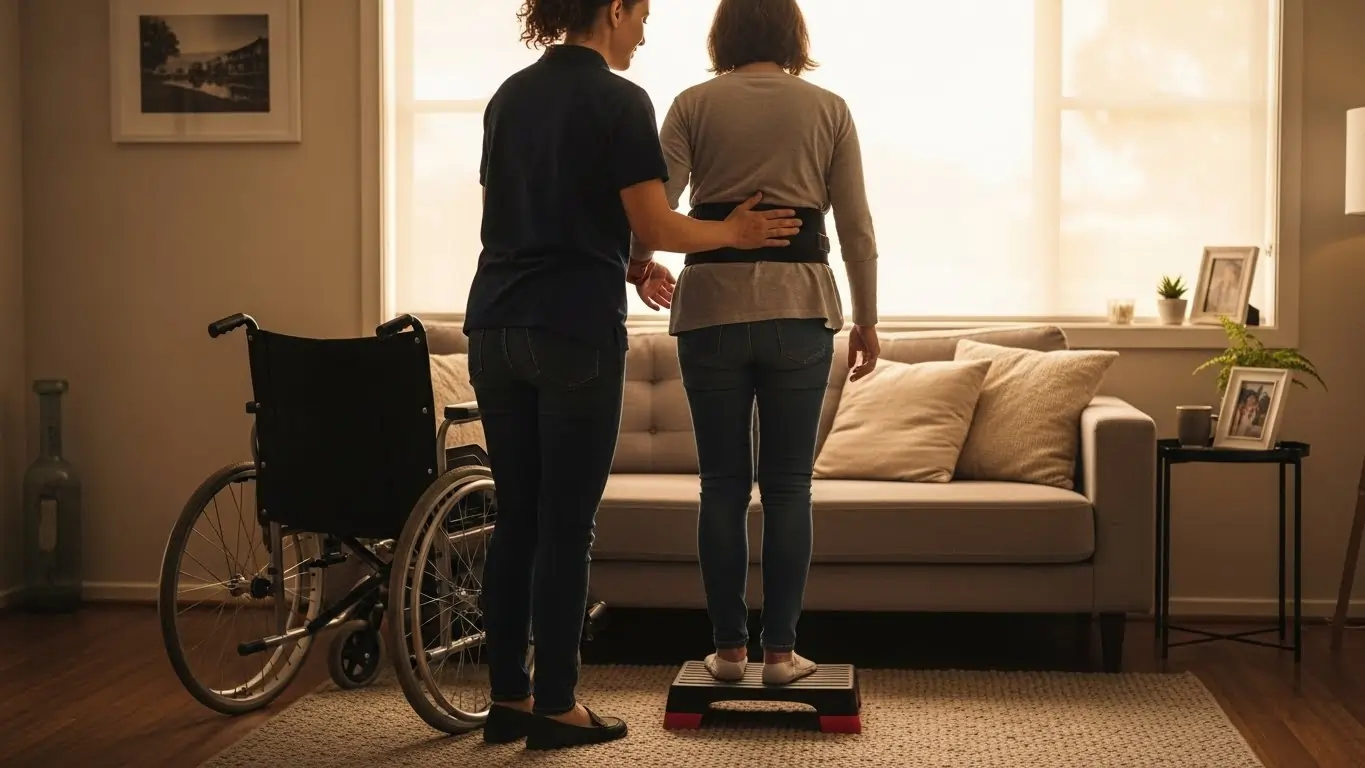
Support workers assist by providing safe transfers, physical guidance, task pacing, and positioning to reduce physical overload and the risk of injury.
How Help at Hand Support Assists Participants With Cerebral Palsy
Help at Hand Support delivers one-to-one support services that help participants with Cerebral Palsy complete everyday tasks safely and reliably.
Support workers follow structured care plans aligned with NDIS goals and individual routines.
Support areas include:
- Personal care assistance, such as showering, dressing, toileting, and grooming
- Mobility support, including transfers, walking assistance, and safe positioning
- Household assistance such as meal preparation, light cleaning, and laundry
- Community access support for appointments, programs, and daily errands
- Routine-based assistance to manage fatigue and physical endurance
All support is non-clinical and delivered within approved NDIS funding.
Daily Living Support for Cerebral Palsy
Daily living support helps participants complete essential tasks while maintaining comfort, dignity, and independence.
Support workers assist participants at their own pace and adjust tasks based on daily physical capacity.
This approach supports stable routines, reduces physical strain, and improves consistency across daily life.
Community Participation and Social Support
Help at Hand Support assists participants with Cerebral Palsy in engaging safely in community activities aligned with NDIS goals.
Support workers provide physical assistance, guidance during outings, and practical help with participation.
Community support may include attending programs, visiting family, running errands, or participating in social activities that support confidence and connection.
Cerebral Palsy Support Across Different Life Stages
Cerebral Palsy support services are suitable for children, adolescents, and adults who require hands-on assistance.
Support adapts as needs change across life stages, including increased independence, routine changes, or transition into adulthood.
We focus on maintaining stability and functional support rather than age-based assumptions.
How NDIS Funding Is Used for Cerebral Palsy Support
Cerebral Palsy support services are funded through NDIS Core Supports.
Funding is commonly used under the Assistance with Daily Living and Assistance with Social and Community Participation programs.
Help at Hand Support works within approved budgets, aligns support hours with plan goals, and manages direct claiming where funding is available.
Why Families Choose Help at Hand Support
Families choose Help at Hand Support because services are delivered through structured routines, trained NDIS support workers, and consistent care approaches.
We prioritise reliability, safety, respectful assistance, and clear communication across all support interactions.
Support focuses on practical daily needs, predictable service delivery, and alignment with NDIS goals to ensure stability and confidence for participants and families.

Getting Started With Cerebral Palsy Support
Starting Cerebral Palsy support with Help at Hand Support begins with understanding daily needs and NDIS goals.
A tailored support plan is developed to match functional requirements, preferred routines, and available funding.
To discuss Cerebral Palsy support services or check NDIS eligibility, contact Help at Hand Support to arrange an initial conversation.
FAQs
Can the NDIS fund support workers for Cerebral Palsy?
Yes. NDIS Core Supports can fund support work for Cerebral Palsy when the assistance aligns with plan goals and approved support categories.
What Cerebral Palsy support can Help at Hand Support provide?
Help at Hand Support provides non-clinical support work, including personal care, daily living assistance, mobility support, and community participation.
Is Cerebral Palsy support available for children and adults?
Yes. Support services are available for children, adolescents, and adults with Cerebral Palsy, tailored to functional needs and NDIS goals.
Can support workers help with transfers and safe mobility?
Yes. Support workers can assist with transfers, safe positioning, and walking support as part of daily living assistance.
How Cerebral Palsy Support Connects With Personal Care Assistance
Cerebral Palsy support often involves regular personal care tasks due to mobility limitations, muscle stiffness, and coordination challenges. Many participants require assistance with showering, dressing, toileting, and daily hygiene as part of their everyday routine.
Help at Hand Support delivers Cerebral Palsy support in alignment with its Personal Care Assistance services, ensuring care tasks are completed safely and consistently.
This integrated approach supports physical comfort, maintains dignity, and reduces daily strain while remaining fully aligned with NDIS goals and Core Supports funding.
Help at Hand Support provides structured NDIS-funded support work for people with Cerebral Palsy, focused on daily living assistance, mobility support, and community participation.
Early engagement helps build consistent routines, maintain safety, and support long-term independence at home and in the community.