Acquired Brain Injury changes how a person remembers, plans, moves, and manages emotions. Families often feel unsure about where to start, and daily routines may become stressful without adequate support.
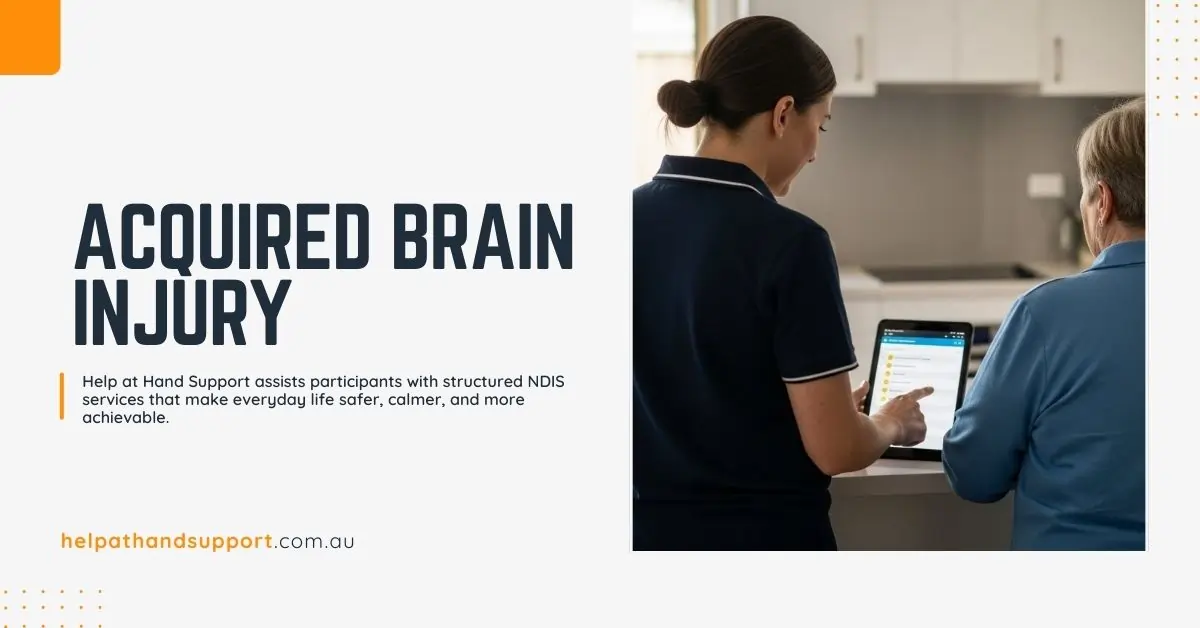
Help at Hand Support assists participants with structured NDIS services that make everyday life safer, calmer, and more achievable.
The goal is to establish stable routines, improve well-being, and drive meaningful progress at home and in the community.
What is Acquired Brain Injury?
Acquired Brain Injury is a change in brain function that occurs after birth and affects how a person thinks, feels, moves, and communicates.
ABI can be caused by stroke, accident, infection, oxygen loss, or medical conditions.
These events may lead to changes, including reduced concentration, difficulty managing emotions, slower processing, and reduced stamina.
Does the NDIS support people with ABI?
The NDIS supports people with Acquired Brain Injury (ABI) when the injury results in long-term functional limitations that affect daily living.
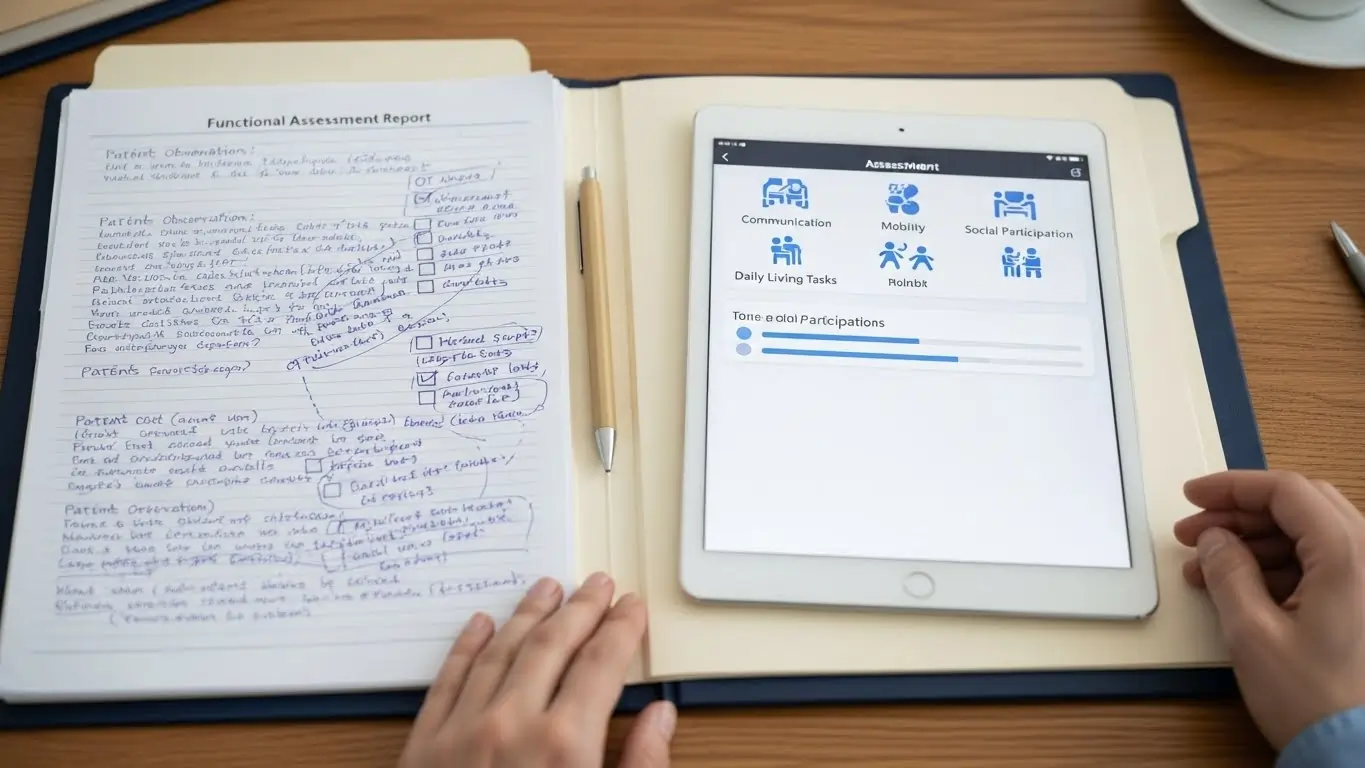
A person may qualify when ABI clearly impairs communication, self-care, planning, social interaction, mobility, or decision-making, and this impairment is confirmed through functional assessments.
The NDIS funds support that directly address these functional needs. These supports include:
- Daily personal care
- Household and routine assistance
- Therapy and capacity-building programs
- Community participation
- Behaviour support implementation
How does Help at Hand Support assist people with ABI?
Help at Hand Support assists people with ABI by providing safe, structured, and goal-focused support across home, community, and therapy-aligned environments.
Support is designed to strengthen independence, build confidence, reduce stress, and create predictable routines. The approach is collaborative, with input from families, therapists, and specialists where needed.
Support areas include several assistance as listed below.
- Personal care, hygiene, grooming, and morning routines
- Household tasks, meal preparation, and organisation
- Emotional reassurance and behaviour-informed strategies
- Support for appointments, programs, recreation, and community outings
- Skill building, such as memory prompts, planning tools, and communication techniques
- Assistance with fatigue management and pacing
Daily Living Support for ABI participants
Daily living support helps ABI participants complete essential routines safely and with less stress, particularly when memory, balance, or energy levels vary daily.
Support workers perform several tasks as listed below.
- Showering, dressing, and grooming
- Medication reminders and routine planning
- Food preparation and safe kitchen use
- Cleaning, laundry, and home organisation
- Planning appointments, errands, and tasks
This reinforces the importance of predictable, long-term assistance.

Community Access Support for Acquired Brain Injury
Community access support enables ABI participants to engage in social, recreational, and learning activities in a safe, supported environment.
Support workers assist with activities such as:
- Shopping, banking, or attending appointments
- Exercise programs, walking groups, or sports
- Social groups, hobbies, art, or music sessions
- Volunteering or community classes
- Gradual exposure to busy places to build confidence
- Transport assistance for NDIS-funded travel
Capacity building and therapy-aligned support
Capacity-building support strengthens cognitive skills, behaviour strategies, and communication through consistent practice in real-world environments.
Support workers collaborate with therapists to reinforce:
- Memory strategies such as planners, reminders, and diaries
- Communication tools recommended by speech therapy
- Step-by-step task sequencing for planning and organisation
- Behaviour support plans through early trigger recognition
- Fatigue management strategies such as pacing and sensory breaks
- Social scripts and role practice for stressful situations
How Families Benefit from Structured ABI Support
Families benefit from ABI support through reduced stress, consistent communication, and shared responsibility for daily routines.
Help at Hand Support focuses on:
- Predictable schedules and calm environments
- Clear explanations of support strategies
- Guidance for responding to behaviour or sensory triggers
- Regular updates so families stay informed
- Encouraging self-advocacy for the participant
Stable support reduces conflict at home and helps families focus on connection rather than crisis management.

Frequently asked questions
What does NDIS support help the most for people with ABI?
Daily living assistance, community access, and therapy-aligned capacity building provide the most significant functional improvements.
Is ABI considered permanent for NDIS purposes?
Yes. ABI is considered permanent when long-term functional changes remain after recovery.
Can a person with ABI live independently with support?
Yes. Many participants live independently with tailored supports.
Does Help at Hand Support provide behaviour support for ABI?
Yes. Behaviour strategies and therapist recommendations inform support.
Does the NDIS cover home assistance for ABI?
Yes. Home assistance is a core support.
Personal Care Assistance for ABI Participants
People living with Acquired Brain Injury often need structured help with self-care, hygiene, meal preparation, routine planning, and safe home functioning. ABI can affect memory, concentration, mobility, and emotional regulation, which makes predictable support essential for daily stability.
Help at Hand Support provides targeted assistance through its Personal Care Assistance service, covering showering, dressing, grooming, medication reminders, and routine cueing. This support strengthens independence, safety, and daily confidence for ABI participants and their families.
Help at Hand Support helps people with ABI start structured NDIS support quickly and with clarity.
Support is delivered by trained NDIS staff and aligned with therapist recommendations where required.