Daniella is a cheerful and easy-going participant living with Huntington’s disease.
She enjoys nature walks around Oakleigh South, trips to the beach, gym visits with support from Help at Hand Support, dance classes, and visits to coffee shops.
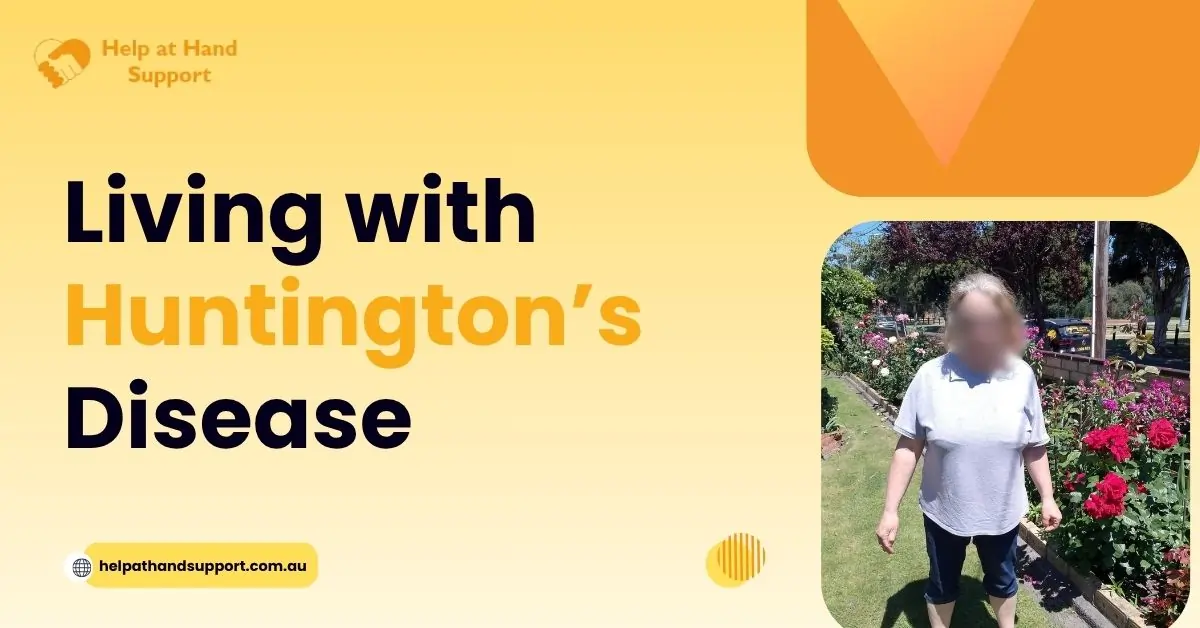
Daniella experiences involuntary movements due to her diagnosis.
Our team at Help at Hand Support provides personalised assistance to ensure she can safely enjoy her favourite activities, maintain her fitness and social connections, and confidently participate in her hobbies.
NDIS Support Services Near Oakleigh South in Clayton
Participants in Oakleigh South can access structured NDIS support through nearby Clayton, where Help at Hand Support delivers daily living assistance, mobility support, and community participation through experienced disability support workers.
Participants can explore NDIS provider in Clayton services for personalised support aligned with NDIS plans, helping maintain independence, physical activity, and social connection.
Names and identifying details have been changed, and images have been edited to protect the identity and privacy of NDIS participants. The experiences described reflect real support delivered by Help at Hand Support.
What is Huntington’s Disease and How Does it Affect Daily Life?
Huntington’s disease is a progressive neurological condition caused by a genetic mutation that affects the brain over time. It impacts movement, cognition, and behaviour, often causing involuntary movements known as chorea, difficulties with balance and coordination, changes in mood and personality, and gradual decline in the ability to carry out everyday tasks independently. For participants like Daniella, who experiences involuntary movements as part of her diagnosis, the challenge is not simply managing symptoms — it is maintaining the quality of life, social connection, and sense of identity that makes each day meaningful. Huntington’s disease affects everyone differently, and its progression can be unpredictable, which means the support around a participant needs to be flexible, consistent, and genuinely person-centred. At Help at Hand Support Services, we understand the complexity of this condition and build our support around the whole person — not just the diagnosis.
How NDIS Funds Support for Participants with Huntington’s Disease
Huntington’s disease is recognised by the NDIS as a permanent and progressive neurological condition, and participants who meet the access requirements are eligible for funded supports. Funding is typically available across several budget categories depending on the participant’s individual needs and goals. Core Supports can fund daily living assistance, personal care, community access, and transport — helping participants like Daniella continue to enjoy gym visits, nature walks, dance classes, and café outings safely and with confidence. Capacity Building supports may fund allied health services such as physiotherapy, occupational therapy, or speech pathology, which play an important role in maintaining mobility, communication, and function for as long as possible. For participants whose needs increase over time, Supported Independent Living may also be available to fund on-site support in a home environment. At Help at Hand Support Services, our team works with participants, families, and support coordinators to ensure NDIS funding is being used in the most effective way to support the participant’s goals and quality of life at every stage of their journey.
How Help at Hand Keeps Participants with Huntington’s Active and Social
For participants living with Huntington’s disease, staying active and socially connected is not just enjoyable — it is clinically important. Regular physical activity supports motor function, mood, and overall wellbeing, while social engagement reduces isolation and supports mental health. Daniella’s love of nature walks around Oakleigh South, beach trips, gym sessions, dance classes, and coffee shop visits is exactly the kind of meaningful participation that Help at Hand Support Services is built to enable. Our support workers are trained to assist participants with involuntary movements safely during community activities — providing physical guidance where needed, anticipating risks in different environments, and adapting to how a participant is feeling on any given day. We match Daniella with familiar workers she knows and trusts, so she can focus on enjoying her activities rather than navigating a new face each session. Over time, these consistent, supported experiences build the social network and physical resilience that help participants live well with a progressive condition.
NDIS Services Available Near Oakleigh South and Clayton
Participants living in Oakleigh South and the surrounding south-east Melbourne suburbs have access to a full range of NDIS supports through Help at Hand Support Services, delivered through our nearby coverage in Clayton. Our Victorian team provides personal care, community access and participation, transport assistance, daily living support, and allied health coordination — all tailored to each participant’s NDIS plan goals and delivered by experienced, background-checked support workers. For participants like Daniella who are living with progressive neurological conditions, we prioritise consistency and familiarity in worker matching to ensure trust, safety, and continuity of care. Whether you are a participant, a family member, or a support coordinator looking for a registered NDIS provider with experience in neurological conditions, we are here to help. Visit our NDIS provider in Clayton page for local coverage details, or contact our team directly on 1300 822 190 to discuss your support needs. You can also explore our Community Assistance, Personal Care, and Transport Services pages to learn more about what we offer.
Quick FAQ

Check out more from our Blog
Book A Care Consult
We will be in contact with you shortly