Help at Hand Support provides NDIS-funded hearing loss support services nationwide, helping participants strengthen communication, independence, and social inclusion.
NDIS participants receive daily-living assistance for hearing loss delivered by HAHS support workers.
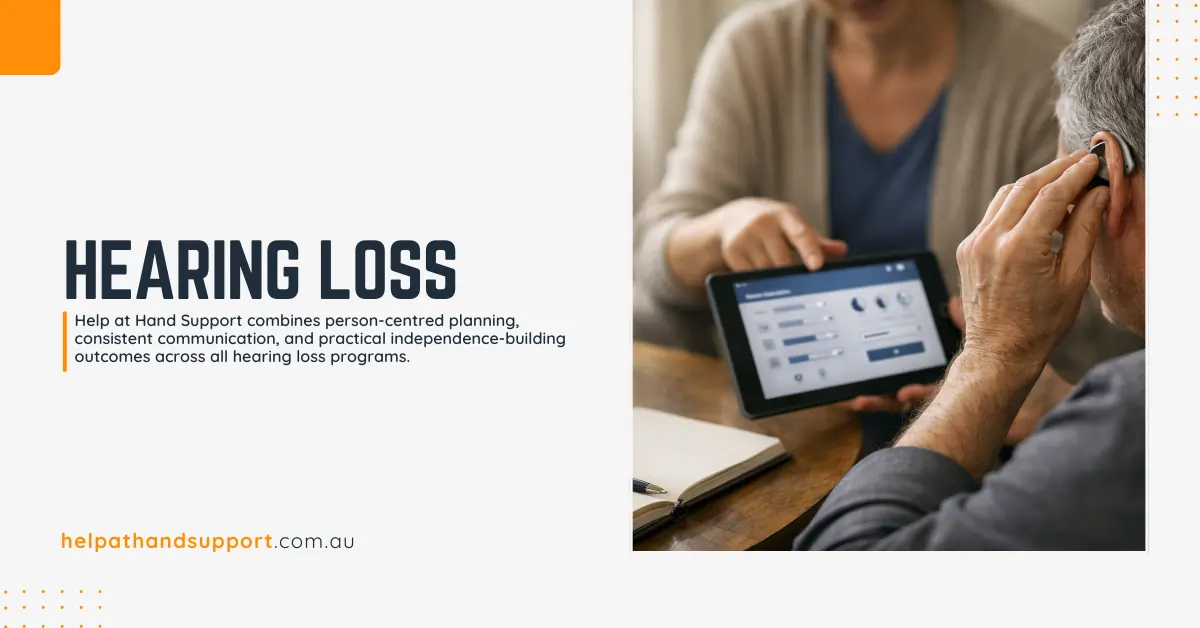
What Does NDIS Hearing Loss Support Involve?
NDIS hearing loss support helps participants with hearing impairments improve communication, safety, and independence through structured assistance with daily living.
Participants with hearing loss gain independence through NDIS-funded programs focused on communication, inclusion, and assistive technology use.
It covers skill development, hearing device support, and community participation activities that build everyday confidence and connection.

What Core Hearing Loss Supports Does Help at Hand Support Provide?
Help at Hand Support delivers tailored NDIS support with support staff who can help you reach your goals and help develop your capacity.
Participants receive personalised daily-living and communication supports that promote long-term independence and inclusion.
The main types of support provided through programs are listed below.
- Daily living assistance that helps with home routines, travel training, and personal organisation.
- Communication support through signing, lip-reading practice, and assistive communication tools.
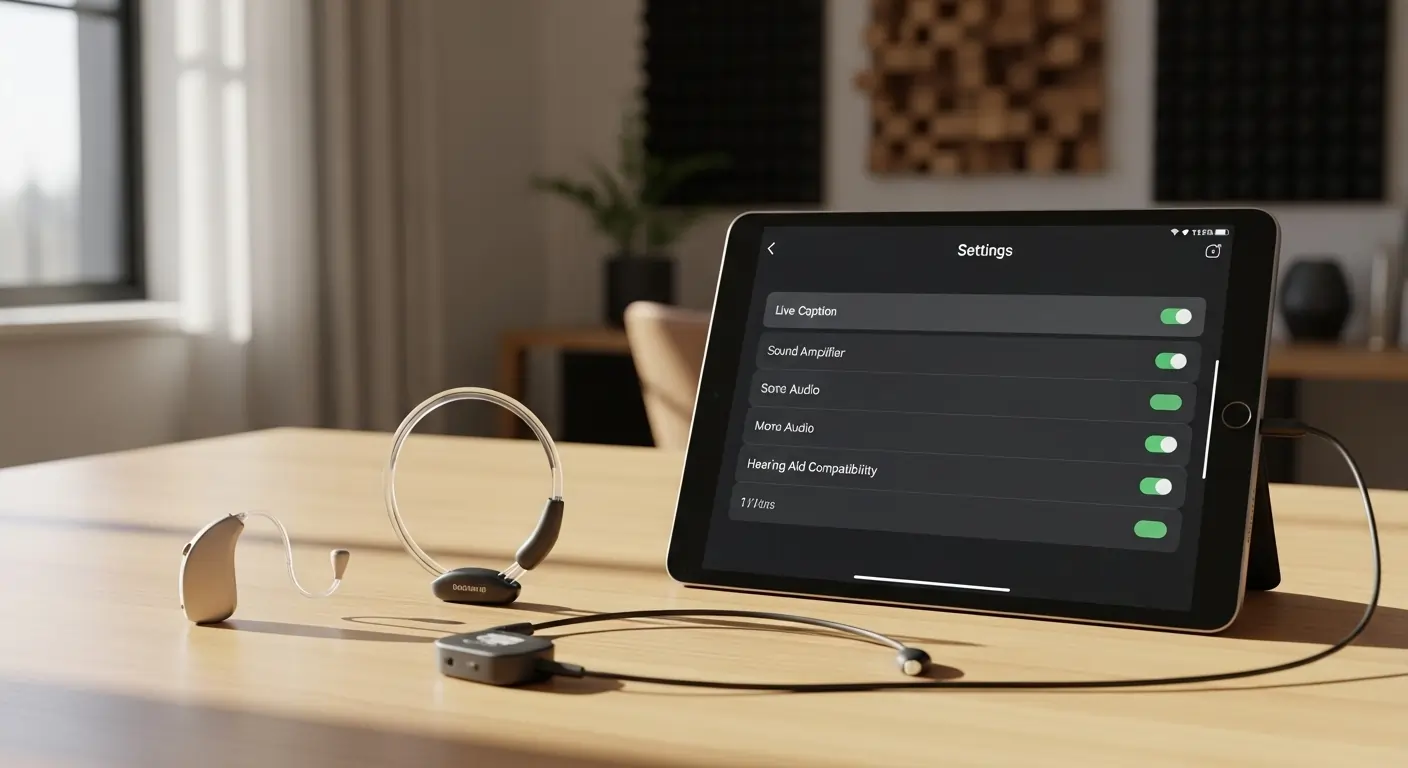
- Assistive technology guidance for setting up and using hearing aids or smart listening devices effectively via your support coordinator.
- Social and community participation through structured activities, group sessions, and inclusive community events.
- Skill-building programs aligned with allied-health recommendations for capacity growth and confidence.
- Safety awareness training to help participants navigate public and home environments safely.
Each plan is reviewed regularly to ensure measurable progress in line with the 2026 NDIS Reform standards.
Who Delivers Hearing Loss Support at Help at Hand Support?
Qualified NDIS support workers deliver daily supports to help you in your day to day support needs.
Every participant receives person-centred support from workers trained to improve communication, confidence, and independence.
Our support team collaborates closely with support coordinators, audiologists, speech therapists, and family members to ensure consistent care and measurable progress.

Why Do Participants Choose Help at Hand Support for Hearing Loss Services?
Participants choose Help at Hand Support for our person-centred approach, qualified workforce, and commitment to measurable progress.
We focus on practical outcomes that improve communication, daily confidence, and independence for people with hearing loss.
The key reasons participants prefer Help at Hand Support are listed below.
- Trained sensory-support professionals who understand communication challenges and adaptive strategies.
- Flexible service delivery across in-home, community, or remote environments to suit each participant’s lifestyle.
- Full compliance with NDIS safeguard requirements (2026) to ensure safety, transparency, and accountability.
- Culturally aware and inclusive programs that respect diversity while helping participants achieve personal goals.
Who Is Eligible for NDIS Hearing Loss Support?
NDIS hearing loss support is available to individuals with a permanent or significant hearing impairment that affects communication, social participation, or daily independence.
Eligibility is determined through an NDIS functional assessment that measures how hearing loss impacts everyday life.
Participants who meet the access criteria can receive assistance across multiple support categories.
The main types of NDIS-funded supports available for hearing loss are listed below.
- Core supports that cover essential daily-living activities, household assistance, and community participation.
- Capacity-building supports that focus on developing communication, social, and independent-living skills.
- Assistive technology supports that provide hearing aids, communication devices, and training to use them effectively.
Each approved support is linked to measurable outcomes and reviewed regularly under the 2026 NDIS Quality and Safeguards Framework.
How you can start Hearing-Loss Support
- Call 1300 822 190 or fill out the online form.
- Provide your NDIS plan and goals.
- Receive a tailored support proposal within one business day.
- Begin scheduled sessions with trained NDIS support workers.
Support delivery follows the participant’s existing NDIS funding categories for sensory disabilities.
Frequently Asked Questions
What does NDIS hearing-loss support include?
It covers daily living assistance, communication training, community participation, and assistive technology guidance tailored to each plan.
Can NDIS fund hearing aids?
Yes. if considered reasonable and necessary under the participant’s sensory-support category.
Do I need a medical diagnosis?
Yes. A hearing assessment confirming functional impact is required to access NDIS.
Are sessions available at home?
Yes. Supports can be delivered in-home, in the community, or remotely.
Do workers know Auslan?
Many support workers are trained in basic Auslan and other communication methods.
How Allied Health Services Strengthen Hearing Loss Support
Participants with hearing loss often benefit from integrated Allied Health Services, in which audiologists, speech pathologists, and occupational therapists work alongside NDIS support workers to improve communication and daily functioning.
Coordinated allied health input ensures each participant’s assistive technology setup, hearing aid use, and skill-building activities stay consistent across home, community, and therapy environments.
Help at Hand Support provides structured, NDIS-funded support for people living with hearing loss, focusing on communication, daily living, and confidence-building through personalised sensory support.
Consistent, goal-focused assistance helps participants strengthen independence, improve comprehension, and participate fully in home and community life.