NDIS-Funded Support for People Living with Spinal Cord Injuries Across Australia
Help at Hand Support delivers structured NDIS-funded spinal cord injury support services nationwide.
Each program promotes independence, mobility, confidence, and inclusion under the NDIS Act 2013 and the 2026 NDIS Quality and Safeguards Framework.
Qualified NDIS support workers provide daily-living assistance, therapy-aligned activities, and adaptive rehabilitation routines that evolve with each participant’s goals.
What Does Spinal Cord Injury Support Include?
Spinal cord injury support under the NDIS covers daily living assistance, rehabilitation, and community participation.
Help at Hand Support tailors each plan to meet physical, social, and accessibility needs through:
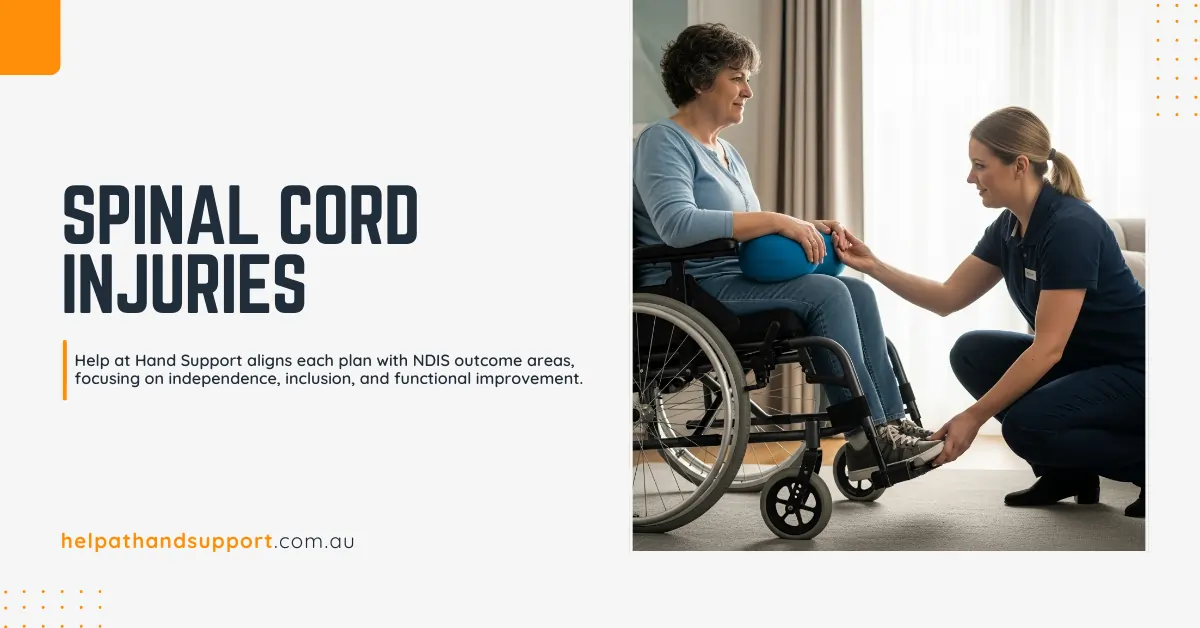
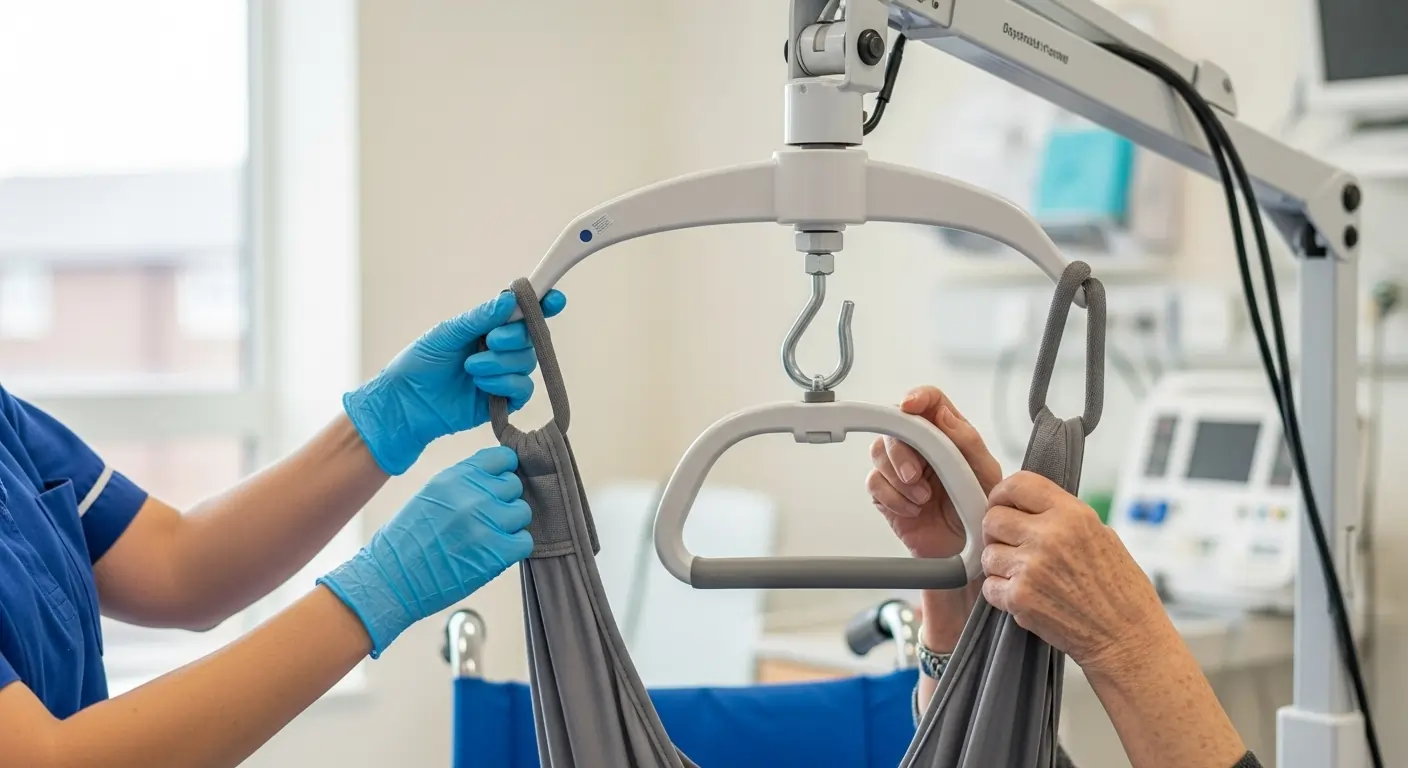
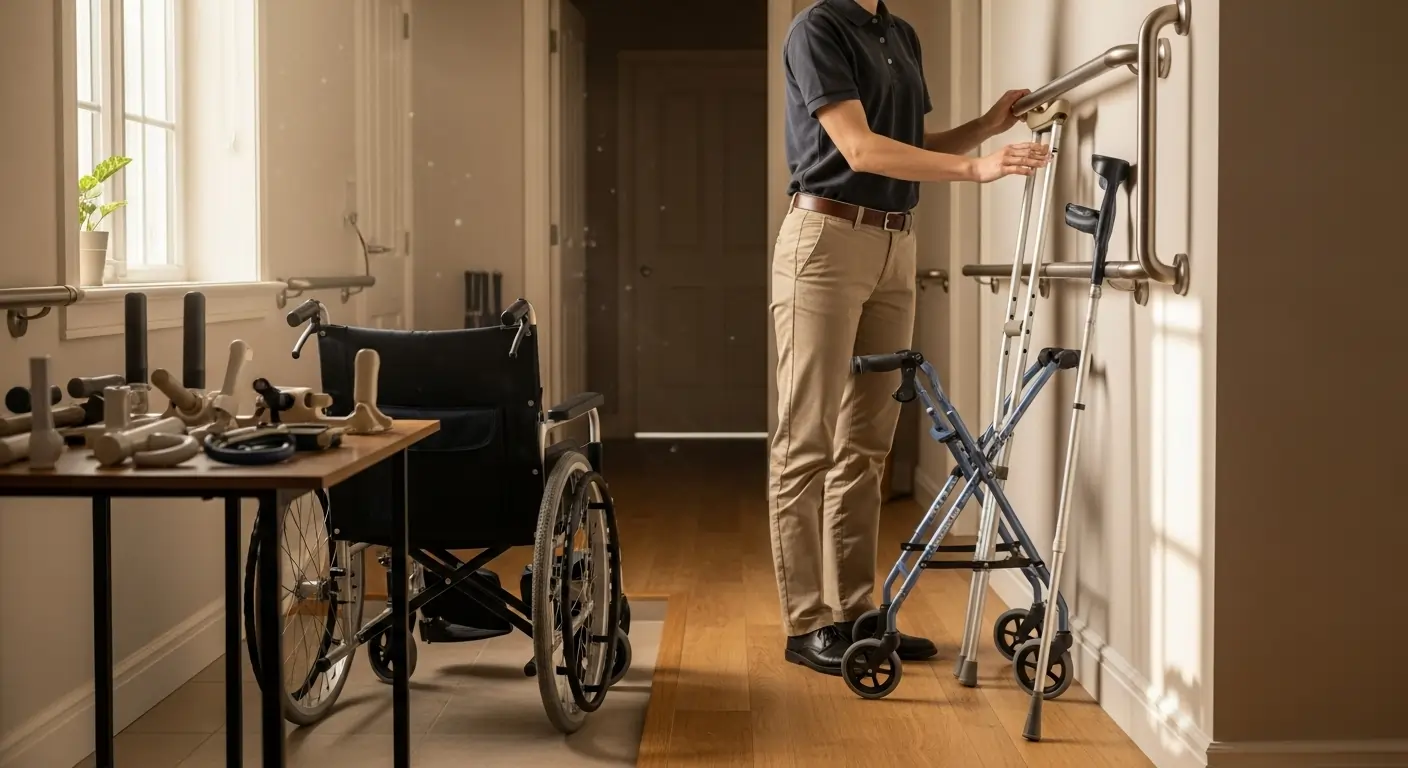
- Personal Care and Mobility Support – Assistance with transfers, showering, dressing, and pressure care management using approved assistive technology, such as wheelchairs and hoists.
- Home Assistance and Accessibility Planning – Domestic support and guidance on adaptive equipment integration.
- Therapy Collaboration – Coordination with occupational therapists, physiotherapists, and rehabilitation specialists to reinforce clinical programs.
- Skill Development Training – Practical sessions that enhance self-care, communication, and daily routines.
- Community Access and Transport Support – Supervised attendance at education, work, and social events via accessible transport bookings.
- Health and Safety Routines – Support for continence management, manual handling techniques, and pressure-injury prevention.
All services align with each participant’s NDIS plan goals and measurable rehabilitation outcomes.
How Help at Hand Support Promotes Recovery and Independence
Recovery and independence result from consistent support, therapy alignment, and adaptive training.
Through coordination among support workers, allied health providers, and family members, participants build both functional skills and emotional confidence.
Key methods include mobility training, pressure care education, and practice with assistive devices to reduce hospital readmissions and increase community access.
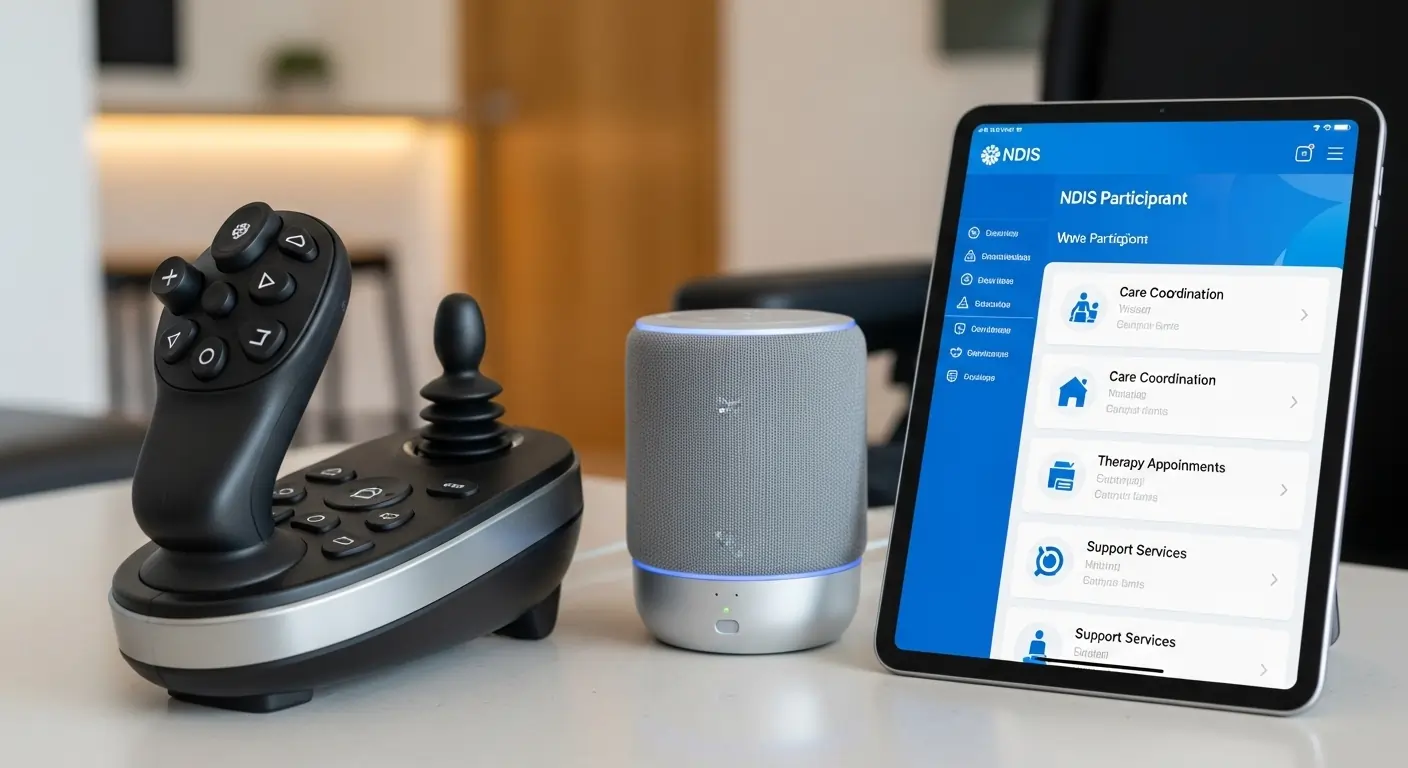
Smart-assistive devices such as voice-activated wheelchair controllers and adaptive digital tools are increasingly used to enhance autonomy a trend identified in the Spinal Cord Injury Australia 2025 Report and AIHW 2024 data showing steady growth in community-based rehabilitation.
Why Choose Help at Hand Support?
Help at Hand Support combines clinical collaboration, trained staff, and participant-led care.
Families and participants trust the organisation for several reasons, as listed below.
- Registration under the 2026 NDIS Quality and Safeguards Framework
- Proven experience supporting paraplegia and quadriplegia participants
- Integration with rehabilitation therapy providers and assistive-tech vendors
- Transparent goal tracking and NDIS-aligned reporting
- Respectful service delivery grounded in participant choice and cultural awareness
Every program maintains NDIS Commission compliance and aligns with current safety standards.
How to Access Spinal Cord Injury Support
Participants can access spinal cord injury support by including daily-living and capacity-building categories in their NDIS plan.
Help at Hand Support assists with intake and service matching to commence support efficiently.
Frequently Asked Questions
What supports are available for people with paraplegia or quadriplegia?
Daily-living support, therapy collaboration, transport, and skill training are available when included in an NDIS plan.
Does Help at Hand Support deliver therapy directly?
No. Therapy is provided by registered health professionals, while support workers assist with daily tasks and with exercise programs set by the registered health professionals.
Can assistive technology be funded under NDIS?
Yes. Wheelchairs, transfer aids, and communication devices may be approved under assistive-technology funding categories.
Are home modifications included?
Yes. Coordination for NDIS-approved home modifications is available through specialist builders.
Personal Care Assistance for Spinal Cord Injury Participants
Participants recovering from spinal cord injuries who require daily living assistance, mobility transfers, or pressure-care management can benefit from Help at Hand Support’s Personal Care Assistance under the NDIS.
This specialised service focuses on safe manual handling, hygiene routines, and independence training, ensuring each participant receives consistent, goal-oriented care aligned with their rehabilitation and mobility goals.
Help at Hand Support provides structured, NDIS-funded support for people living with spinal cord injuries, focusing on daily living, mobility, and rehabilitation-based skill development.
Consistent, goal-focused support helps participants improve independence, strengthen physical capability, and increase confidence in both home and community environments.