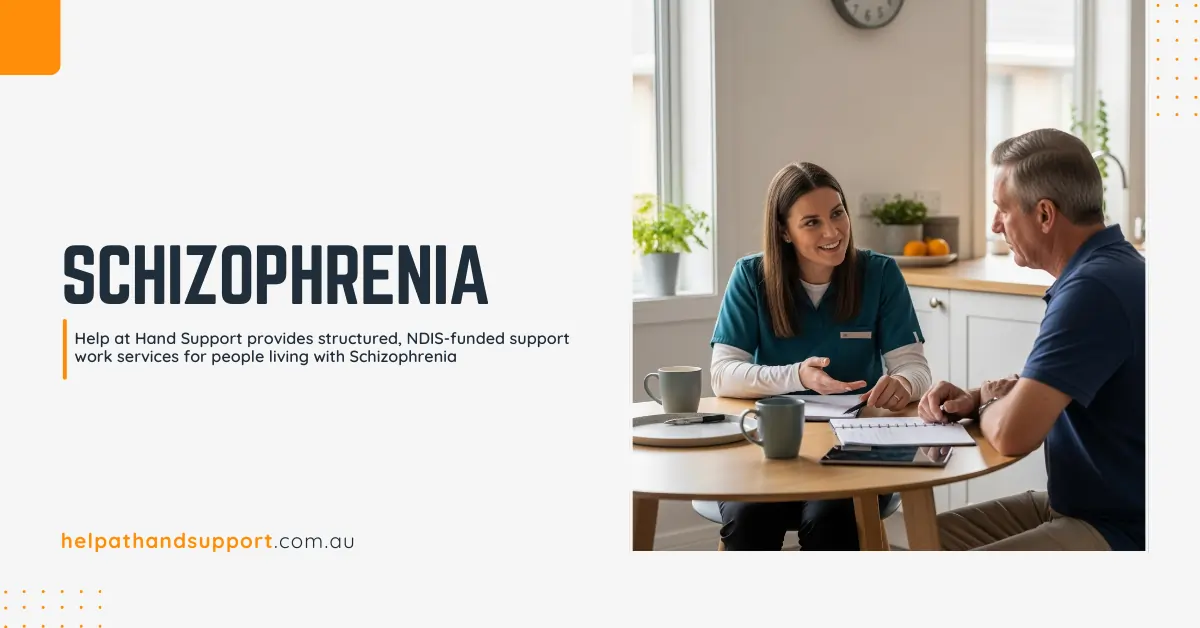
Help at Hand Support provides structured, NDIS-funded support work services for people living with Schizophrenia, focused on daily stability, independence, and consistent psychosocial engagement.
Each plan is tailored to predictable routines, real-world participation, and hands-on skill-building, so participants can live confidently and safely at home and in the community.
What Does the Schizophrenia Support Work Service Include?
The Schizophrenia Support Work Service provides hands-on, structured support to help participants maintain daily stability and independence.
A trained support worker assists each participant with:
- Personal care and household tasks, including meal preparation, cleaning, and self-care routines.
- Medication reminders and routine management to ensure consistency and safety.
- Planned appointment transport as part of scheduled daily activities.
- Community and social participation to build confidence and connection.
This structured, routine-based support reduces environmental stress and creates predictable patterns that help participants feel calm, secure, and in control of their daily lives.

What Is Schizophrenia and How Does It Affect Daily Living?
Schizophrenia affects thinking, behaviour, and perception, often making daily tasks more complex.
It can disrupt motivation, memory, and time management, making it harder to maintain personal care or social connections.
Help at Hand Support addresses these barriers through structured routines, guided decision-making, and emotional support aligned with the NDIS 2026 psychosocial framework.
This approach focuses on functional capacity building rather than clinical treatment, ensuring practical progress within each participant’s NDIS plan.
How Support Workers Assist Participants Living with Schizophrenia
Support workers provide structured, goal-based assistance that strengthens independence and promotes daily stability.
Our support workers’ role focuses on four essential areas as listed below.
- Creating consistent routines for personal care, meals, and household organisation.
- Encouraging community participation through supported social engagement and scheduled outings.
- Building communication and coping skills to help manage stress and emotional triggers.
- Collaborating with families and clinicians to maintain a unified, recovery-focused plan.
By using repetition and predictable scheduling, the support worker helps reinforce positive daily habits, reduce the risk of relapse, and improve overall confidence in everyday life.

Practical Benefits of NDIS-Funded Schizophrenia Support Work
NDIS-funded Schizophrenia support work provides structure, safety, and consistency that improve daily wellbeing and independence.
Participants gain greater control and confidence through:
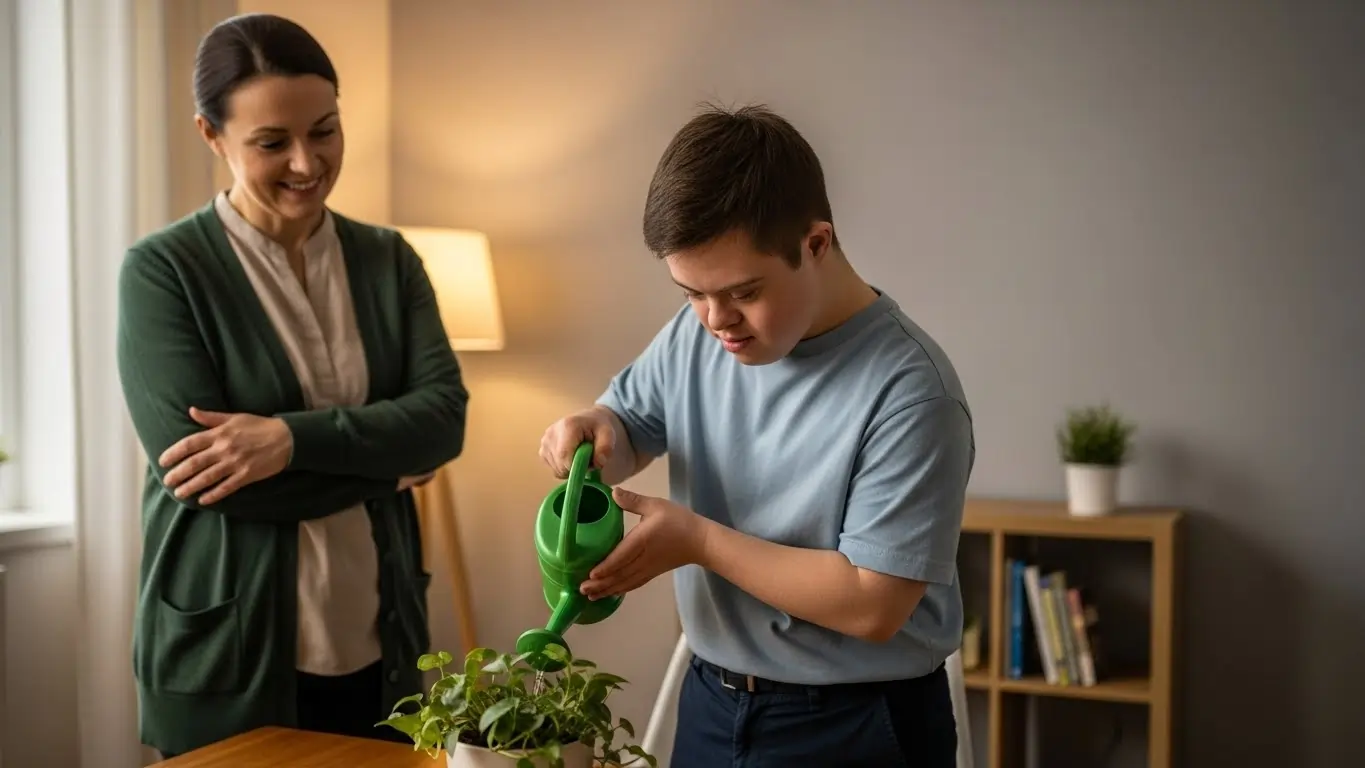
- Reliable hands-on support for personal care, household tasks, and everyday routines.
- Predictable scheduling that reduces stress and promotes emotional stability.
- Encouraged community engagement to strengthen social participation and communication skills.
- Collaborative coordination with families and health professionals for holistic outcomes.
- Goal-based motivation supported by achievable milestones and ongoing feedback.
This combination of structure and consistent support helps participants maintain stability and live more independently within their NDIS plan.
Why Choose Help at Hand Support for Schizophrenia Support Work
Help at Hand Support provides structured, compassionate, and evidence-based assistance for people living with Schizophrenia.
Each service focuses on maintaining safety, stability, and consistent daily progress through practical, goal-driven support.
All support workers are trained in psychosocial and behavioural strategies specific to Schizophrenia, ensuring participants receive respectful and predictable care that promotes confidence and emotional balance.
We at Help at Hand Support deliver NDIS-funded Schizophrenia support services across both metropolitan and regional areas of Australia, offering flexible scheduling to align with individual routines and NDIS plan goals.

FAQs
What does Schizophrenia support work include under the NDIS?
Schizophrenia includes hands-on help with personal care, household management, and community participation delivered by trained support workers.
Is Schizophrenia support work the same as therapy or counselling?
No. Support work provides daily assistance and routine structure, while therapy offers clinical treatment. Both can co-exist within a participant’s NDIS plan.
Can support be provided at home?
Yes. Services are delivered in participant homes, community locations, and during appointments, depending on plan goals.
Does Help at Hand Support cover regional areas?
Yes. Support is available across metropolitan and regional Australia to ensure continuity and flexibility.
Can family members be involved in planning?
Yes. Families and carers work collaboratively with support teams to align routines and goals for best outcomes.
Is the program aligned with the NDIS 2026 psychosocial framework?
Yes. All services follow the updated NDIS 2026 guidelines for psychosocial recovery and functional outcome measurement.
Supporting Community Participation and Psychosocial Stability
Participants living with Schizophrenia benefit from consistent community engagement that builds confidence, routine, and emotional balance.
Through Help at Hand Support’s Community Access services, support workers assist individuals in reconnecting with their communities, attending appointments, joining social programs, and participating safely in everyday activities.
This structured community involvement strengthens functional capacity, reduces isolation, and complements NDIS-funded Schizophrenia support work by ensuring participants remain active, socially included, and empowered in both home and public settings.
Help at Hand Support provides structured NDIS-funded support work for people living with Schizophrenia, focused on routine stability, daily independence, and community interaction.
Early engagement with a consistent support worker reduces stress and improves day-to-day functioning, promoting long-term confidence at home and in the community.