The proposed under-16 social media ban in Australia has sparked intense debate nationwide. For many teenagers, it could simply mean less screen time.
But for teens living with disability, it affects their ability to connect, express themselves, and belong.
Advocates warn that the policy could deepen social isolation for young people already facing accessibility and participation barriers.
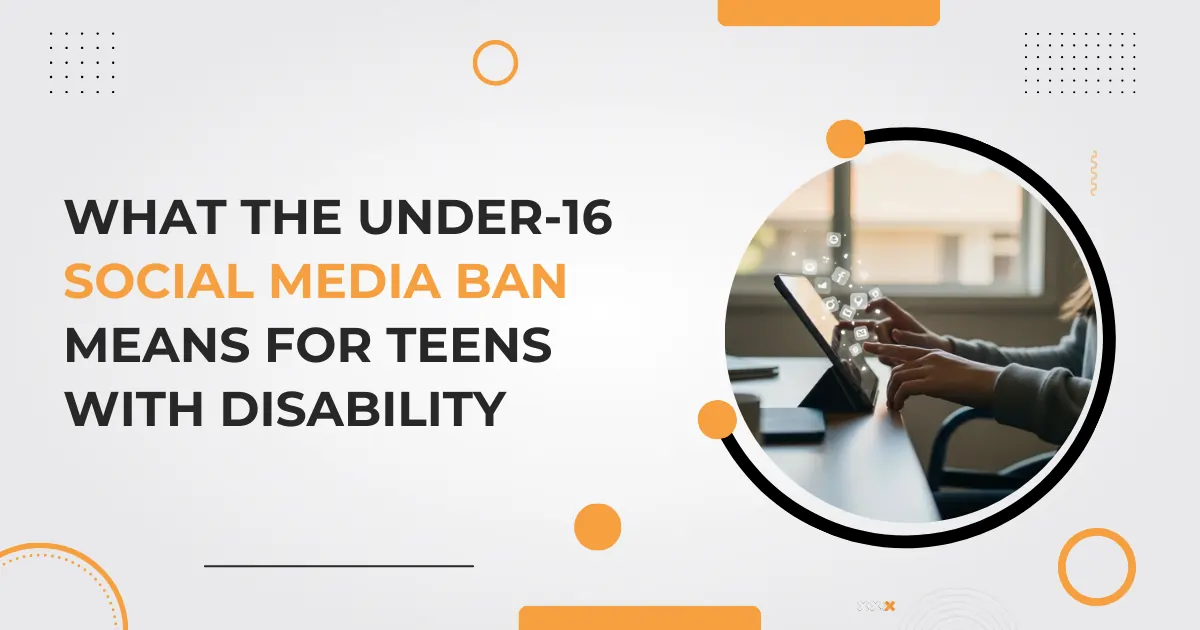
Why Social Media Matters for Teens with Disabilities
Social media supports connection, identity, and inclusion for teens with disabilities.
Online platforms remove many physical barriers that limit face-to-face interaction. While public venues may lack ramps, sensory-friendly areas, or inclusive layouts, social platforms give equal space to all users.
This digital accessibility allows teens with chronic illness, mobility challenges, or sensory conditions to engage safely and confidently, even on days when leaving home is difficult.
Beyond communication, these platforms amplify self-advocacy and empowerment. As disability and mental-health advocate Emily Unity notes, taking away social-media access is not just isolating it is silencing.

How does online access promote inclusion?
Social media lets young people share lived experiences, celebrate identity, and connect with supportive peers.
For many, it becomes a community classroom for understanding disability rights, mental health, and self-expression. Removing that access risks shrinking their world.
Concerns About the Social Media Ban
The greatest fear among young people with disabilities is more profound isolation. Many already face limitations due to pain, mobility issues, fatigue, or sensory overload.
Without an online connection, social withdrawal and loneliness can intensify.
Advocates highlight that many real-world settings, from schools to community programs, remain only partially accessible.
This means that digital environments are often the most consistent social outlet for many teens with disabilities.
Teens also rely on social media to build confidence, form identity, and find mentors with shared experiences.
Critics argue that a blanket ban removes autonomy and ignores the developmental value of online belonging.

Why is accessibility often overlooked?
Because physical inclusion requires structural investment, digital spaces have become a more achievable route for many families. Until society bridges that accessibility gap, social media remains one of the few truly inclusive environments.
Arguments for Exemption or Tailored Policies
Disability organisations propose customised access frameworks instead of an all-or-nothing rule. These could include:
- Disability-based exemptions allow continued use for those who depend on digital communities.
- Alternative compliance models that restrict harmful content but retain connection for vulnerable users.
- Accessible age-verification or “safe-mode” tools that protect privacy while supporting neurodiverse and mobility-impaired users.
Such measures preserve safety goals while upholding equity and inclusion principles set out under the Disability Discrimination Act 1992.

How Help at Hand Support Can Help Teens Navigate Change
The uncertainty around the ban can heighten anxiety for young people who rely on online connections.
Help at Hand Support ensures no teen feels left out by:
- Providing emotional reassurance and peer-based mentoring.
- Supporting safe digital engagement through accessible alternatives.
- Encouraging community participation both online and offline.
- Making sure every young person feels heard, valued, and connected.
📞 Call: 1300 822 190
✉️ Email: admin@helpathandsupport.com.au
FAQs
Will the social-media ban automatically apply to teens with disability?
Yes. Under current proposals, all users under 16 would be restricted unless exemptions are created.
Why is social media so important for disabled teens?
It provides accessible ways to communicate, share experiences, and form friendships that are not limited by mobility or sensory barriers.
Could there be tailored access options?
Yes. Disability advocates are pushing for inclusive frameworks that maintain safety while preserving access.
What can parents and carers do now?
Stay informed, engage in open conversations with children, and seek support from NDIS providers such as Help at Hand Support.
Does Help at Hand Support provide guidance on digital skills?
Yes. Support workers help young participants use online spaces responsibly and confidently.
Community Access Program
Building stronger offline connections is just as important as maintaining digital ones. That is why Help at Hand Support’s Community Access service helps young people with disability stay socially active, explore local activities, and strengthen friendships in safe, supported environments.
Support workers assist with attending events, joining interest groups, or developing new hobbies, ensuring participants remain connected and confident even if online access becomes limited.
Community access program reinforces inclusion and belonging the same values at the heart of the social-media debate by keeping every young person engaged in community life.

Check out more from our Blog




Book A Care Consult
We will be in contact with you shortly