Help at Hand Support provides structured NDIS-funded support for people with Down syndrome across Australia.
Each plan is delivered by trained NDIS support workers who build independence, communication, and social confidence, in accordance with the NDIS Act 2013 and the 2026 NDIS Quality and Safeguards Framework.
Our services focus on functional skill growth, early intervention, and inclusive community participation.
What Is Down Syndrome Support under the NDIS?
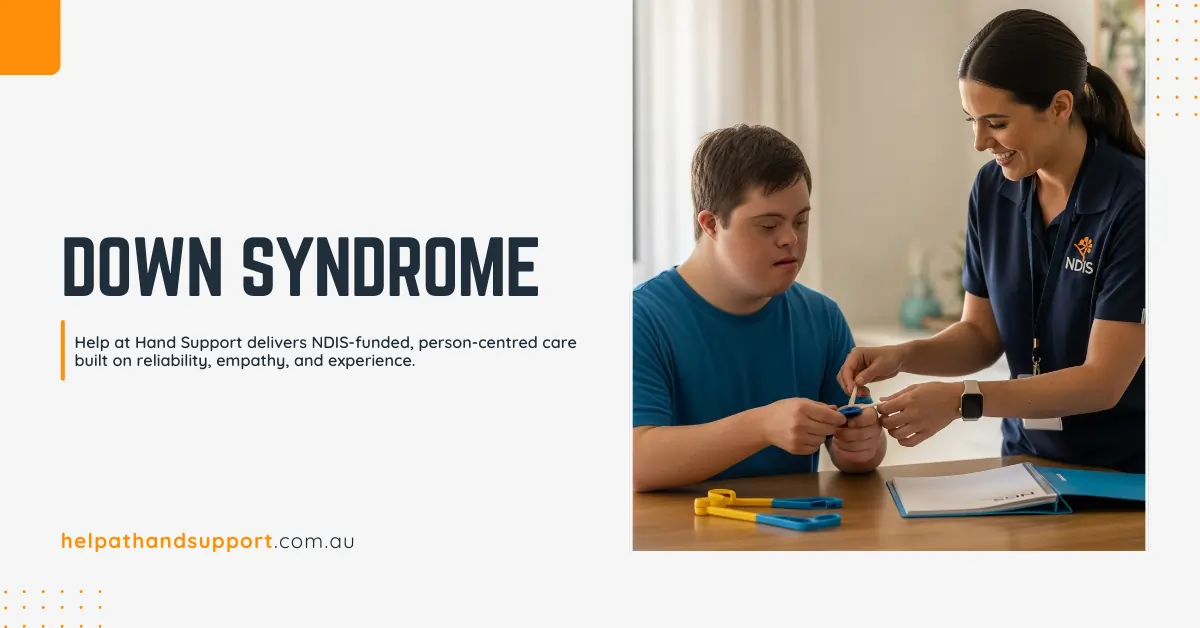
Down syndrome support is individualised daily-living and capacity-building assistance for people with Trisomy-21 diagnoses funded through the NDIS.
Services strengthen personal care, home skills, communication confidence, and community access.
Allied health practitioners may collaborate through functional assessments and visual communication aids to optimise outcomes.

How Help at Hand Support Delivers Down Syndrome Support
Help at Hand Support delivers Down syndrome support through a structured, participant-focused model designed to build independence and confidence in everyday life.
Qualified NDIS support workers follow consistent routines, use positive behaviour support strategies, and engage in capacity-building activities tailored to each participant’s goals.
Every program is guided by the NDIS Quality and Safeguards Framework 2026, ensuring a safe, inclusive, and evidence-based approach.
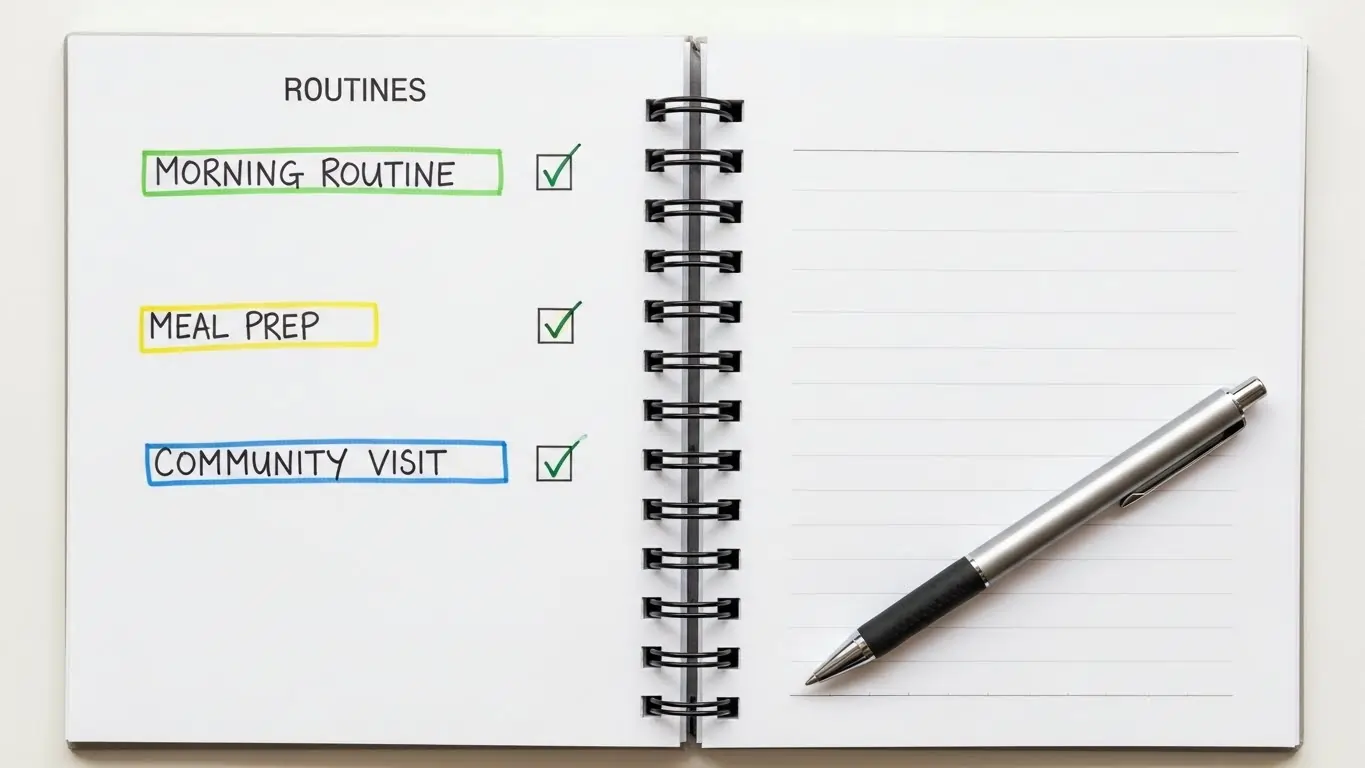
Sessions include morning readiness training, meal-preparation practice, community-participation support, and functional-skill transfer across home, education, and social environments.
This method reinforces long-term learning, enhances emotional regulation, and promotes measurable outcomes in daily living skills for people with Down syndrome.
Key Skills Developed Through Down Syndrome Support
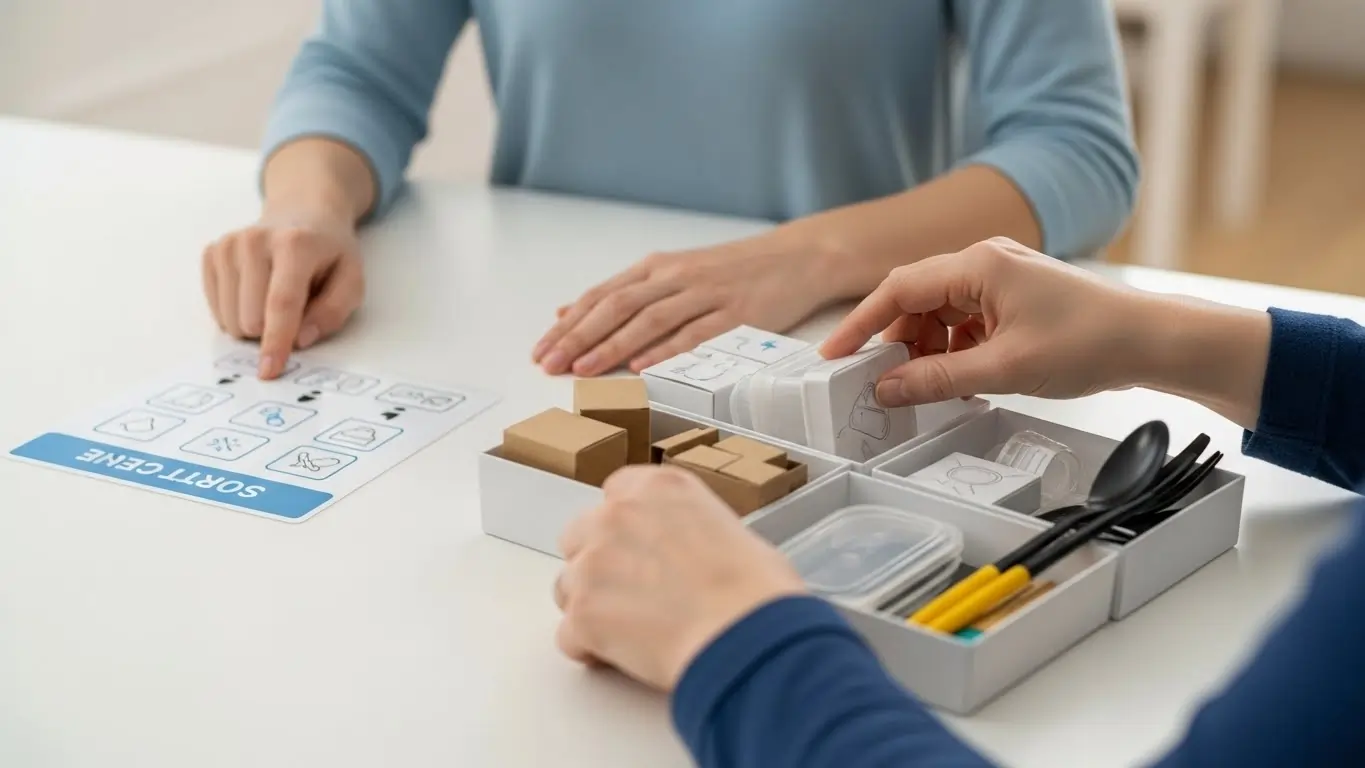
Participants receiving Down syndrome support from Help at Hand Support build adaptive life skills that strengthen autonomy and long-term independence.
Each NDIS support plan focuses on practical, repeatable activities that improve confidence, safety, and social engagement. With guidance from trained NDIS support workers, participants learn to apply new skills consistently across home, school, and community settings.
Core skills developed are as listed below.
- Personal care and hygiene routines that promote self-reliance and daily independence
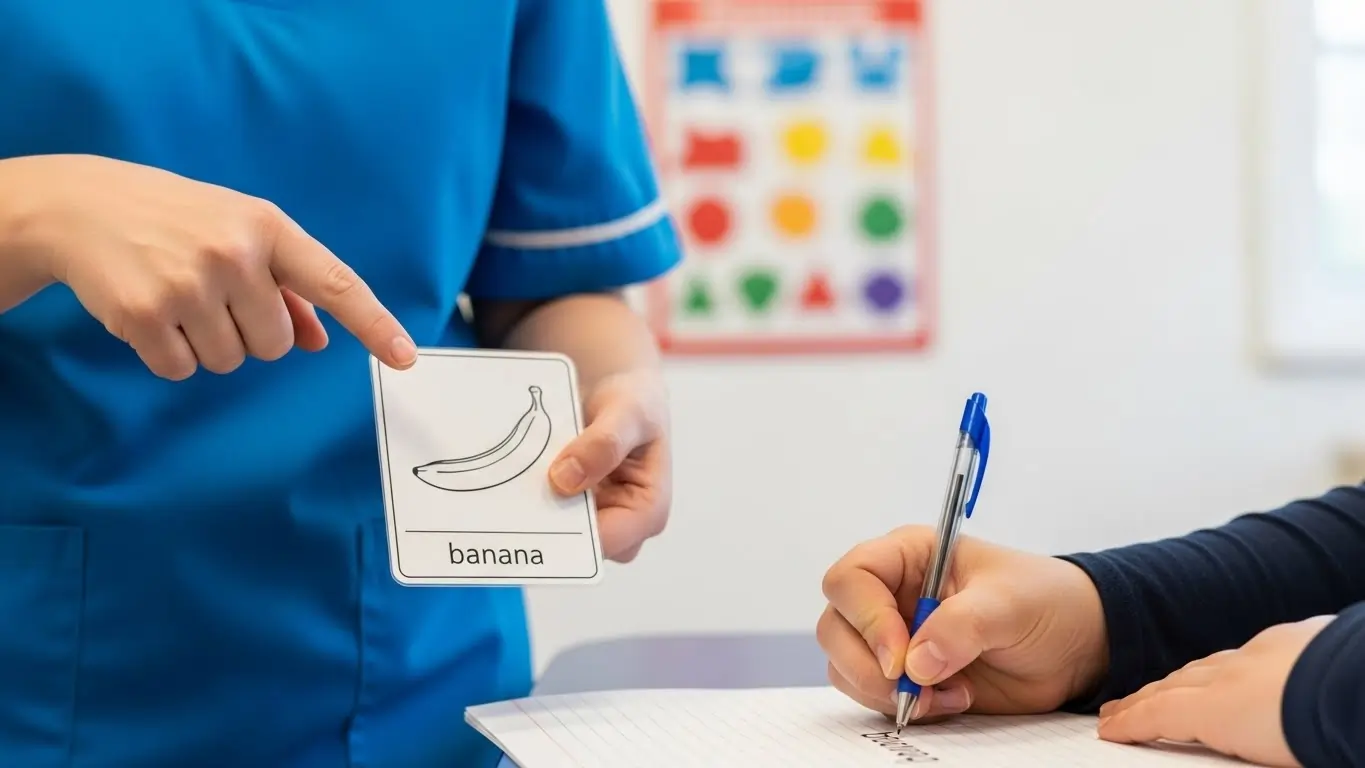
- Speech and language practice using visual communication aids to enhance clarity and interaction
- Household organisation and safety awareness for safer, more structured living environments
- Time management and routine scheduling to create stability and reduce anxiety
- Budgeting and community navigation skills for greater participation in everyday activities
- Emotional regulation through structured routines that support confidence and well-being
Why Ongoing Down Syndrome Support Matters
Regular NDIS support prevents skill regression and maintains emotional stability.
A 2024 Down Syndrome Australia report found that participants in structured capacity-building programs showed a 30% increase in independent task completion scores.
Who Provides Down Syndrome Support
All Down syndrome support services at Help at Hand Support are delivered by qualified NDIS support workers who hold current NDIS Worker Screening Clearances and are trained in visual communication methods, positive behaviour support, and capacity-building techniques.
Each support worker adheres to the NDIS Quality and Safeguards Framework 2026, ensuring every participant receives safe, inclusive, and culturally responsive care.
Ongoing supervision, professional development, and compliance audits maintain the highest standards of NDIS service delivery, giving families confidence in the quality and consistency of support provided.

Eligibility for NDIS-Funded Down Syndrome Support
Eligibility applies to participants whose Down syndrome diagnosis causes functional limitations in self-care or communication.
Help at Hand Support guides families through documentation and plan setup to activate funded supports.
Benefits of Down Syndrome Support Programs
Help at Hand Support’s NDIS-funded Down syndrome programs deliver measurable improvements in both functional ability and social participation.
Each program is designed to drive lasting development, helping participants achieve greater independence and confidence in daily life.
Key benefits are as listed below.
- Greater independence in daily living tasks, including self-care and household activities
- Improved communication and literacy confidence through structured speech and interaction practice
- Enhanced emotional regulation supported by consistent, predictable routines
- Stronger family collaboration and community inclusion, promoting social belonging and engagement
- Smoother transition to school, work, or community programs, supported by skill generalisation and behavioural stability
These outcomes reflect Help at Hand Support’s evidence-based approach to NDIS Down syndrome services, ensuring participants develop the skills, stability, and confidence needed for long-term independence.
Frequently Asked Questions
What is the purpose of Down syndrome support?
To help participants achieve independence and participate safely in the community.
Does the NDIS fund capacity-building programs?
Yes. Funding covers skill development and independence training.
Are functional assessments required?
Yes. They establish baseline abilities for goal measurement.
Do support workers use visual aids?
Yes. Visual schedules and communication cards assist learning.
Can adults receive support?
Yes. All age groups are eligible under the NDIS.
Personal Care Assistance
Participants with Down syndrome often benefit from structured personal care assistance that reinforces daily routines, hygiene management, and self-reliance skills.
Help at Hand Support’s Personal Care Assistance services align with NDIS daily living goals, allowing trained support workers to help participants practise safe grooming, dressing, and mealtime activities while maintaining consistency with their Down syndrome support plan and the NDIS Quality and Safeguards Framework 2026.
Help at Hand Support provides structured NDIS-funded support work for people with Down syndrome, focused on daily living skills, communication development, and practical independence.
Early engagement supports consistent routines, improves emotional stability, and helps participants build confidence at home, school, and within the community.