High Intensity Support

High intensity support provides specialised assistance for NDIS participants with complex physical support needs, behaviours of concern, or both.

At Help at Hand Support, we provide High Intensity Physical Support for participants who require specialised daily personal activities and High Intensity Behaviour Support for participants who require Positive Behaviour Support, Behaviour Support Plans and specialist behaviour intervention.

Our trained and competency-assessed teams deliver person-centred support that promotes safety, dignity, independence and quality of life.

“High intensity support is about understanding each participant’s needs and delivering the right support safely, consistently and respectfully.”
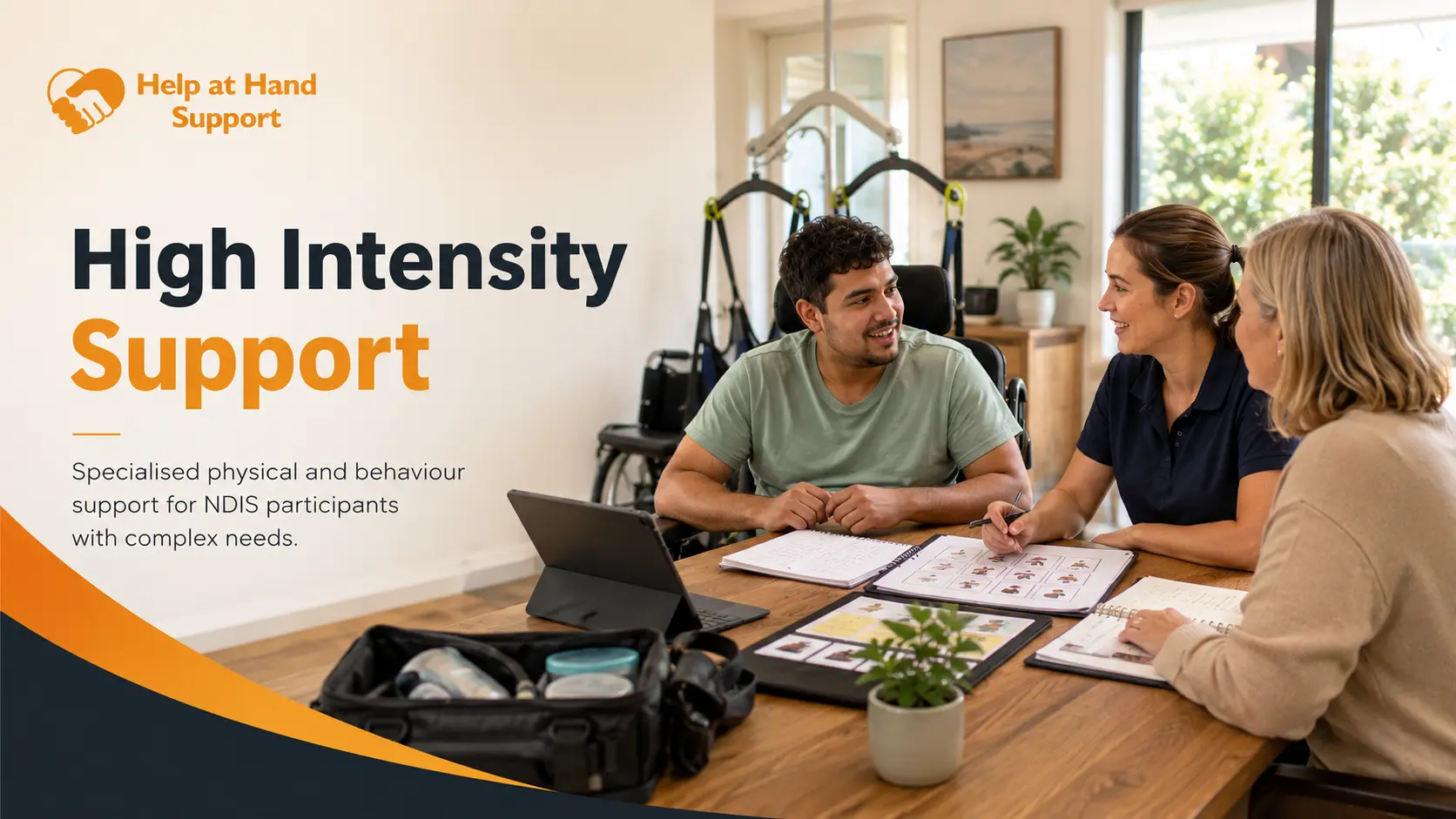
High Intensity Support

What Is High Intensity Support?

High intensity support is specialised NDIS support for participants whose physical care needs, behaviours of concern, or both require additional training, participant-specific competency and documented support plans.

Unlike standard disability support, high intensity support involves more complex activities or interventions that require specialised knowledge, consistent delivery and clear support instructions.

Help at Hand Support provides two high intensity service pathways:

  • High Intensity Physical Support for complex physical disability and disability-related health support needs.
  • High Intensity Behaviour Support for behaviours of concern requiring Positive Behaviour Support, Functional Behaviour Assessments or Behaviour Support Plans.

Participants may require one service or a coordinated combination of both, depending on their individual goals, routines and support needs.

What People Often Misunderstand About High Intensity Support

High intensity support is based on the participant’s individual support needs, not simply a diagnosis or service label.

Not Always Nursing Care

Many High Intensity Daily Personal Activities can be delivered by trained and competency-assessed support workers under documented support arrangements.

Two Different Services

Physical support focuses on complex daily personal activities. Behaviour support focuses on understanding and responding to behaviours of concern.

Some Participants Need Both

Participants with both complex physical needs and behaviours of concern may benefit from coordinated physical and behaviour support.

Support Is Individualised

Support is matched to the participant’s goals, routines, documented plans, risks and individual support requirements.

Our High Intensity Support Services

We provide two specialised services for participants with complex physical support needs, behaviours of concern, or both. Each service has a distinct purpose, while a coordinated approach may be used where both types of support are required.

High Intensity Physical Support

High Intensity Physical Support assists participants whose daily personal activities require specialised knowledge, participant-specific training and competency-assessed support workers.

Common supports include:

  • Complex bowel care
  • Enteral feeding support
  • Dysphagia support
  • Tracheostomy support
  • Ventilation support
  • Urinary catheter support
  • Subcutaneous injections
  • Wound and pressure injury support
  • Epilepsy and seizure support

Support with hoist transfers, two-person transfers and overnight care may also be provided where included in the participant’s support arrangements.

High Intensity Behaviour Support

High Intensity Behaviour Support focuses on understanding the reasons behind behaviours of concern and developing practical, evidence-based strategies that improve quality of life and independence.

Common supports include:

  • Functional Behaviour Assessments
  • Behaviour Support Plans
  • Positive Behaviour Support strategies
  • Restrictive practice reduction
  • Regulated restrictive practice monitoring
  • De-escalation and crisis response
  • Skill building
  • Environmental adjustments
  • Data collection and reporting
  • Stakeholder collaboration

Support is developed around the participant’s goals, communication needs, routines and everyday environments.

High Intensity Physical Support vs High Intensity Behaviour Support

Both services support participants with complex needs, but they address different aspects of daily life and require different professional capabilities.

High Intensity Physical Support

  • Supports complex physical and daily personal activities

  • Includes High Intensity Daily Personal Activities

  • May include enteral feeding and dysphagia support

  • Delivered by trained and competency-assessed support workers
  • May include wound, pressure injury and seizure support
  • May include tracheostomy, ventilation and catheter support

High Intensity Behaviour Support

  • Delivered by qualified behaviour support practitioners
  • May include restrictive practice reduction and skill building
  • May include Behaviour Support Plans
  • May include Functional Behaviour Assessments
  • Uses Positive Behaviour Support principles
  • Supports complex behaviours of concern

When You May Benefit From Both Services

Some participants require both specialised physical support and behaviour support.

For example, a participant may require High Intensity Physical Support for enteral feeding, epilepsy support or another complex daily activity while also receiving High Intensity Behaviour Support for behaviours of concern that affect communication, routines or participation.

Where both services are required, our teams can work together to provide coordinated support aligned with the participant’s documented plans, goals and daily routines.

Which Service May Be Appropriate?

  • Complex physical care: High Intensity Physical Support
  • Behaviours of concern: High Intensity Behaviour Support
  • Both physical and behaviour needs: A coordinated approach using both services
  • Unsure which applies: Speak with our team about your current needs and NDIS supports

Who Is High Intensity Support For?

High intensity support is designed for NDIS participants whose needs go beyond standard disability support and require specialised knowledge, participant-specific training or structured behaviour intervention.

You may benefit from high intensity support if you:

  • Require High Intensity Daily Personal Activities delivered by trained and competency-assessed support workers.

  • Need support such as enteral feeding, dysphagia support, tracheostomy support, ventilation support, complex bowel care or urinary catheter support.

  • Require Positive Behaviour Support, Functional Behaviour Assessments or Behaviour Support Plans for behaviours of concern.

  • Need consistent support delivered according to documented plans, risk controls and established routines.

  • Would benefit from coordinated communication between participants, families, carers, support workers and other relevant professionals.

The appropriate support is determined by the participant’s individual needs and circumstances rather than a diagnosis alone.

How We Deliver High Intensity Support

Support is planned around the participant’s individual needs, documented instructions, goals and established daily routines.

1

Discuss Your Needs

We begin by understanding your goals, routines, current supports and NDIS arrangements.

2

Review Support Plans

We review relevant support documentation and participant-specific instructions.

3

Match the Right Team

We match participants with suitable support workers or behaviour support practitioners.

4

Deliver Support

Support is delivered according to documented plans while respecting dignity and choice.

5

Review and Adapt

Support arrangements are reviewed when participant needs or instructions change.

High Intensity Support and Your NDIS Plan

High intensity support may be funded through an eligible participant’s NDIS plan where the supports are considered reasonable and necessary and included in the approved funding.

Depending on the participant’s needs, this may include High Intensity Daily Personal Activities, behaviour support, or both.

Our team can discuss the services we provide and help you understand how they may fit alongside your existing NDIS supports. Funding decisions and plan inclusions remain subject to the participant’s approved NDIS plan.

Why Choose Help at Hand Support?

Person-Centred Support

We take the time to understand each participant’s goals, preferences, communication needs and routines.

Appropriately Trained Teams

Workers and practitioners are matched to the type of participant-specific support being delivered.

Collaborative Communication

We work with participants, families, carers, support teams and other relevant professionals.

24/7 Availability

Daytime, overnight, weekend and public-holiday support may be arranged according to participant needs.

Continuity of Support

We aim to provide familiar staff and coordinated backup arrangements to minimise avoidable disruptions.

Frequently Asked Questions

High intensity support is specialised NDIS support for participants with complex physical care needs, behaviours of concern, or both. It may require trained and competency-assessed support workers, qualified behaviour support practitioners and participant-specific support plans.

High Intensity Physical Support focuses on complex daily personal activities and physical support needs. High Intensity Behaviour Support focuses on behaviours of concern through Positive Behaviour Support, Functional Behaviour Assessments and Behaviour Support Plans.

Yes. Some participants have both complex physical support needs and behaviours of concern. Where appropriate, physical and behaviour support can be coordinated around the participant’s documented plans and daily routines.

No. Some activities may involve training, competency assessment or oversight from an appropriately qualified health practitioner. Many High Intensity Daily Personal Activities can be delivered by trained and competency-assessed support workers according to documented instructions.

High intensity support may be funded where it is included in the participant’s approved NDIS plan and considered reasonable and necessary for their disability-related support needs.

Yes. Depending on the participant’s support arrangements, high intensity support may be delivered in private homes, shared accommodation or Specialist Disability Accommodation.

Physical support may be appropriate where your needs involve complex daily personal activities. Behaviour support may be appropriate where behaviours of concern require assessment and Positive Behaviour Support. Some participants may benefit from both services.

Not Sure Which Support You Need?

Speak with our team about High Intensity Physical Support, High Intensity Behaviour Support or a coordinated approach using both services.

Book a Care Consult

Complete the form and our team will contact you to discuss your High Intensity Support needs.