Brendon is a participant living with blindness (Bilateral Idiopathic Optic Neuritis) and enjoys living independently in his own home.
He loves using his home gym, listening to music, and staying active and engaged in his favourite hobbies.
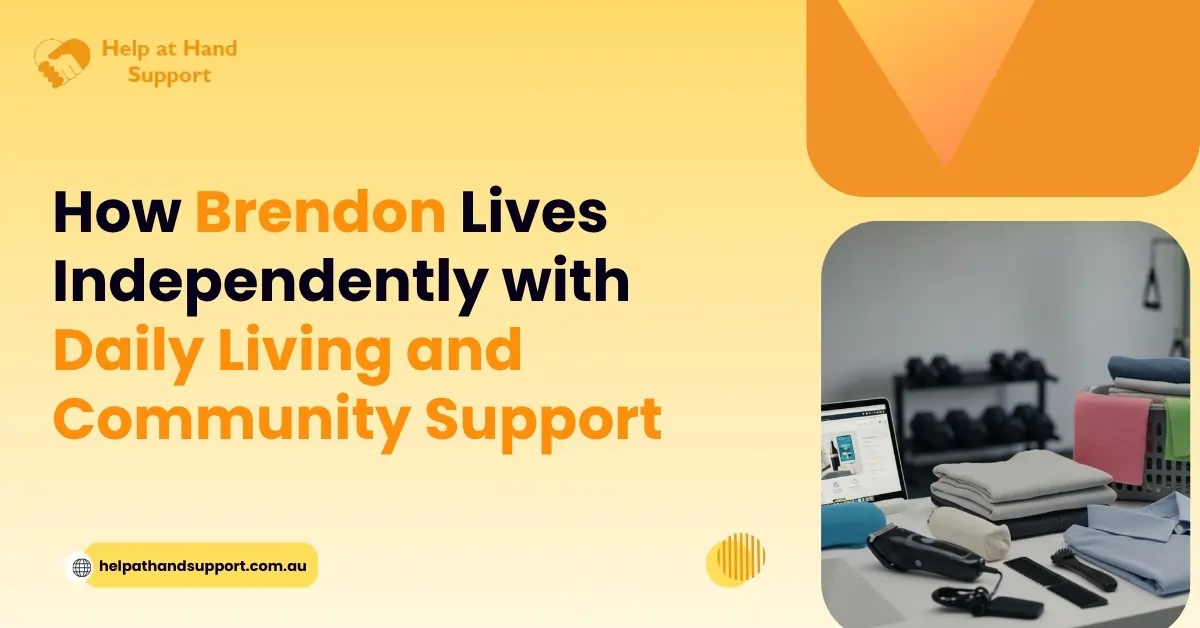
Help at Hand Support provides Brendon with personalised assistance for personal care, including dressing, nail cutting, and moustache trimming, as well as domestic support such as light cleaning, laundry, meal preparation, and online shopping.
Our team also supports Brendon with community access, helping him engage in activities and outings in the Doreen area, attend medical appointments, run errands, go shopping, visit coffee shops, and stay socially connected.
With tailored support, Brendon can increase his independence, confidently access the community, and continue living safely and comfortably at home while enjoying his daily activities.
NDIS Support Near Doreen in Epping
Participants near Doreen can access NDIS daily living support, personal care, household assistance, and community access, delivered in line with the NDIS Act 2013 and NDIA guidelines.
Local support in Epping focuses on routine-based care, domestic tasks, and safe participation in community activities, helping participants maintain independence and consistency in daily life.
Learn how these supports are delivered locally on the NDIS Provider in Epping page.
Names and identifying details have been changed, and images have been edited to protect the identity and privacy of NDIS participants. The experiences described reflect real support delivered by Help at Hand Support.
What is Bilateral Idiopathic Optic Neuritis and How Does It Affect Daily Life?
Bilateral Idiopathic Optic Neuritis is a condition involving inflammation of the optic nerves in both eyes, which can result in significant or total vision loss. Unlike some other causes of vision impairment, idiopathic optic neuritis occurs without a clearly identified underlying cause, making it unpredictable and at times difficult to manage medically. For participants like Brendon, whose condition has resulted in blindness, the day-to-day impact is wide-ranging — from carrying out personal care tasks safely, to navigating the home environment, accessing the community, managing household responsibilities, and staying socially connected. Living with blindness does not mean giving up independence. With the right support in place, participants can continue to live in their own home, maintain their routines, and engage actively in the activities they enjoy. At Help at Hand Support Services, we build support plans around what a participant can do and what they value — not around the limitations of their diagnosis.
How NDIS Funds Daily Living and Personal Care for Participants with Vision Impairment
The NDIS recognises vision impairment as a permanent disability and funds a range of supports to help participants live independently and participate in the community. For participants like Brendon, NDIS Core Supports can cover daily living assistance such as help with dressing, grooming, meal preparation, laundry, light cleaning, and household tasks that are difficult or unsafe to complete without sighted assistance. Personal care support — including assistance with nail cutting, moustache trimming, and other grooming tasks — is also fundable where it relates to the functional impact of the participant’s disability. Community access funding enables participants to attend medical appointments, go shopping, visit local cafés, run errands, and engage in social activities with the support of a trusted worker. At Help at Hand Support Services, we deliver all of these supports in a way that prioritises Brendon’s dignity, autonomy, and preference — doing things with him, not for him, wherever possible. Our goal is always to build confidence and independence, not dependence on support.
How Help at Hand Supports Participants with Blindness to Stay Active and Connected in Doreen
Living with blindness in a suburban area like Doreen presents specific practical challenges — from navigating local streets and transport options, to accessing community facilities and services safely. Help at Hand Support Services provides Brendon with consistent, familiar support workers who know his routines, his home environment, and his preferences. This familiarity is essential for someone with vision impairment — a support worker who understands how Brendon moves through his home, what orientation strategies he uses, and which local routes and venues he frequents can provide far more effective assistance than an unfamiliar face each session. We support Brendon to use his home gym safely, enjoy his music and hobbies, access the Doreen community with confidence, and maintain the independent lifestyle he has built. Our team also provides domestic support that keeps his home environment safe and manageable — because a well-organised, familiar environment is foundational to independence for someone living with blindness. Support delivered through our NDIS provider in Epping covers Doreen and surrounding areas across Melbourne’s northern growth corridor.
NDIS Vision Impairment Support Services Near Doreen and Epping
Participants living with vision impairment or blindness in Doreen and the surrounding north Melbourne suburbs — including Epping, South Morang, Mernda, and Whittlesea — can access a full range of NDIS supports through Help at Hand Support Services. Our Victorian team delivers personal care, community access, domestic assistance, transport support, and daily living assistance — all tailored to each participant’s NDIS plan goals and delivered by trained, background-checked support workers who understand the specific needs of participants with vision impairment. We match participants with consistent workers to build the trust and familiarity that is particularly important for participants with blindness, and we coordinate closely with families, support coordinators, and allied health teams to ensure the best possible outcomes. To find out more or make a referral, contact our team on 1300 822 190 or visit our NDIS provider in Epping page.
Quick FAQ

Check out more from our Blog
Book A Care Consult
We will be in contact with you shortly