If you have received a new or reassessed NDIS plan since May 2025, you may have noticed something different — your full funding amount is not sitting there ready to use from day one. Instead, it is being released in stages throughout your plan.
This is not a mistake or a reduction in your funding. It is the result of a significant change called NDIS funding periods. Here is everything you need to know.
What Are Funding Periods?
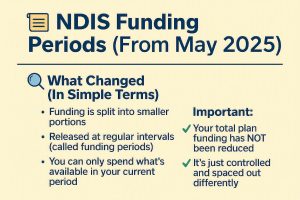
From 19 May 2025, the NDIA began introducing funding periods into all new and reassessed NDIS plans. Rather than making your entire plan budget available upfront, your funding is divided into portions that are released at set intervals throughout the life of your plan.
Think of it like receiving a monthly salary rather than a lump sum payment at the start of the year. The total amount is the same — it is just spread across the plan period to help you make it last.
Why Did the NDIA Introduce Funding Periods?
The NDIA introduced funding periods to help participants manage their budgets more effectively over the full life of their plan. Prior to this change, some participants would exhaust their funding early in the year and then have nothing left for the second half. Funding periods are designed to prevent that from happening.
The NDIA has also stated that funding periods support better planning and help ensure the NDIS remains sustainable for future participants.
How Do Funding Periods Work in Practice?
Your plan will show funding in stages
When you receive your new plan, it will show your total budget and the funding amounts available in each period. Three months is the most common length, but this can vary — some high-cost regular supports, such as Supported Independent Living, are often set to monthly funding periods to align with how the service is delivered.
Unused funding can roll over
If you do not spend all of your funding in one period, any unspent amount will generally roll over to the next period. This means you are not penalised for not spending every dollar — your unused funding stays available.
Important: rollover only applies within the same plan. Once your plan ends, any unspent funds are returned to the NDIA and do not carry over into your next plan — so it is still important to use your funding across the life of the plan.
You still have choice and control
Funding periods do not change which supports you can purchase or which providers you can use. You still have full choice and control over how you spend each portion of your funding within NDIS guidelines.
What If I Have an Urgent Need Mid-Period?
“If your circumstances change and you have an urgent support need before your next period releases, you can contact the NDIA to discuss your options. In exceptional circumstances, the NDIA may bring forward a future funding period where there is a genuine urgent need — though this does not increase your total plan funding, only when it becomes available. Your Support Coordinator or Local Area Coordinator can assist you to make this request.
Tips for Managing Your NDIS Funding Periods
- Know your period dates: Find out exactly when each funding period starts and ends. Your NDIS plan or MyNDIS portal will have this information.
- Plan ahead for regular supports: If you use support workers weekly, make sure you have enough funding in each period to cover your usual schedule.
- Track your spending: Use your MyNDIS app or ask your Plan Manager to provide regular spending updates so you always know where you are at.
- Do not leave it too late: If you notice you are underspending in one period, consider using that funding for equipment, therapies, or other supports you have been putting off.
- Talk to your Plan Manager: A good Plan Manager can help you map out your supports across each funding period so nothing falls through the cracks.
TIP: Help at Hand Support Services offers Plan Management. We can track your funding periods and alert you if you are at risk of under- or over-spending. Call 1300 822 190 to find out more.
Does This Affect Older Plans?
Funding periods themselves are not new — they were first introduced in October 2024, when all new and reassessed plans began including a standard 12-month period. What changed from 19 May 2025 is the move to shorter periods, usually three months, released in stages. If your plan was in place before 19 May 2025 and has not been reassessed, these shorter funding periods may not yet apply to your current plan. However, when your plan is next reviewed or reassessed, they will be introduced. Now is a great time to get familiar with how they work so you are prepared.
We Are Here to Help
Changes to how NDIS funding works can be stressful, especially when you rely on those funds to access the supports you need every day. At Help at Hand Support Services, our Plan Managers and Support Coordinators are experienced in navigating every aspect of NDIS funding — including the new funding period arrangements.

Check out more from our Blog



Book A Care Consult
We will be in contact with you shortly