High Intensity Physical Supports
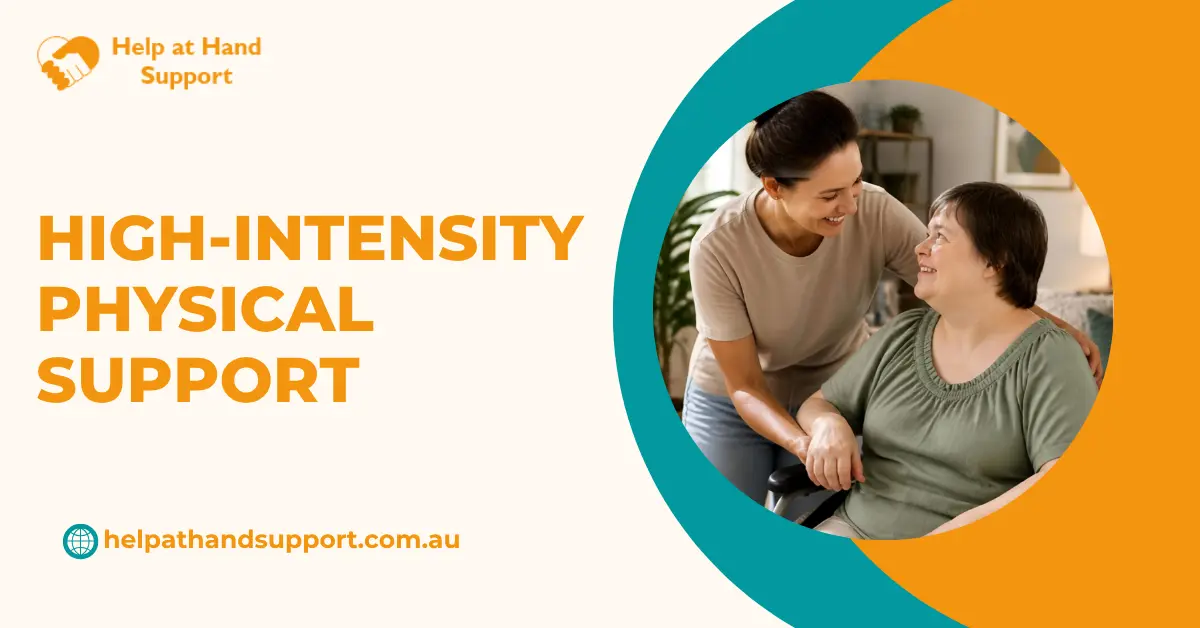
High-intensity physical support provides specialised, hands-on assistance for NDIS participants with complex physical disability or disability-related health needs.
Delivered by trained and competency-assessed support workers, it may include mobility assistance, complex personal care, equipment-related support and other high-intensity daily personal activities completed under documented plans and safety procedures.
The aim is to protect the participant’s health and safety while supporting independence, dignity and established daily routines.
“High intensity support is not just about following a care plan. It is about delivering each task safely, consistently and respectfully for the person relying on that support.”
What is High Intensity Physical Supports?
High-intensity physical support covers daily personal activities that carry greater health and safety risks and require workers with specialised training and participant-specific competency assessment.
Within the NDIS Practice Standards, these supports are known as High Intensity Daily Personal Activities. Providers must ensure workers have the required training, knowledge, supervision and documented instructions before delivering each support task.
These supports may be required when a participant’s disability-related health needs go beyond what standard personal care can safely address. This may include the use of prescribed equipment, complex personal care routines, enteral feeding, dysphagia support, ventilation support, catheter care, seizure support or other tasks covered by an individual support plan.
High-intensity physical support is not simply about completing a task. Each activity must be delivered consistently and safely according to the participant’s care instructions, risk controls, emergency procedures and established daily routine.
Our High Intensity Physical Support Services
Our support workers are trained and competency-assessed against the NDIS Commission’s High Intensity Support Skills Descriptors, enabling them to deliver High Intensity Daily Personal Activities safely and in accordance with each participant’s documented support plan.
- Complex Bowel Care – Supporting individual bowel care programs using participant-specific techniques, equipment and documented procedures.
- Enteral Feeding Support – Assisting with enteral feeding and nutritional support delivered through a feeding tube in accordance with an individual care plan.
- Dysphagia Support – Supporting participants with swallowing difficulties by following documented mealtime management plans and safe eating and drinking practices.
- Tracheostomy Support – Providing tracheostomy support in accordance with participant-specific care instructions and established safety procedures.
- Ventilation Support – Assisting participants who rely on prescribed ventilation equipment as outlined in their individual support plan.
- Urinary Catheter Support – Supporting urinary catheter care, drainage systems and routine monitoring in accordance with documented care instructions.
- Subcutaneous Injections – Supporting prescribed subcutaneous injections in line with participant-specific training and documented care plans.
- Wound and Pressure Injury Support – Assisting with pressure care, repositioning and wound support as directed within an individual support plan.
- Epilepsy and Seizure Support – Following seizure management plans, responding appropriately during seizure events and documenting outcomes.
Beyond these areas, our team also provides support with hoist transfers, two-person transfers and overnight care where these supports are included in the participant’s individual support plan.
High Intensity Physical Support can also be delivered alongside our Complex Care Support 24/7 service, helping provide consistent, coordinated support for participants with complex and ongoing care needs.



Who Is High-Intensity Physical Support For?
High intensity physical support is designed for NDIS participants with complex physical disability or disability-related health needs that require specially trained support workers rather than standard personal care.
You may benefit from high intensity physical support if you:
- Use a ventilator, tracheostomy or urinary catheter.
- Require enteral feeding, dysphagia support or complex bowel care.
- Need support with epilepsy or seizure management.
- Require wound and pressure injury support.
- Need high intensity daily personal activities delivered according to an individual support plan.
- Require disability-related support following a hospital stay or a change in your support needs.
Depending on the participant’s support needs and the type of high-intensity activity, a qualified health practitioner may provide participant-specific training, develop support instructions or assess worker competency. Trained support workers then deliver support in accordance with the participant’s documented care plan and NDIS Practice Standards.
Why Choose Help at Hand Support?
Help at Hand Support combines specialised training with compassionate, person-centred care to deliver high-intensity physical support safely, consistently and with respect for every participant’s independence and dignity.
- Person-Centred Support – We take the time to understand each participant’s goals, routines, communication preferences and support needs before delivering high-intensity physical support.
- Continuity of Care – We aim to provide consistent support workers and coordinated backup arrangements to minimise interruptions to your care.
- Trained and Competency-Assessed Workers – Our support workers are trained and assessed against the NDIS Commission’s High Intensity Support Skills Descriptors before delivering participant-specific supports.
- 24/7 Support Availability – High-intensity physical support can be provided during the day, overnight, on weekends and public holidays according to your NDIS plan and support needs.
- Collaborative Care – We work closely with participants, families, carers and relevant health practitioners to ensure support is delivered consistently and in line with documented care plans.
Our Participants
Frequently Asked Questions

Book A Care Consult
We will be in contact with you shortly