NDIS Disability Support Provider in Clayton
NDIS disability support in Clayton helps participants build independence, maintain structured routines, and participate safely in everyday environments across the City of Monash.
Help at Hand Support provides NDIS disability support services in Clayton, VIC 3168, delivering structured, routine-based assistance that improves functional capacity, strengthens daily stability, and supports safe participation in community life.
All services align with plans approved by the National Disability Insurance Agency (NDIA) under the NDIS Act 2013, and delivery follows the standards set by the NDIS Quality and Safeguards Commission.
What Is an NDIS Provider in Clayton
An NDIS provider in Clayton delivers funded, non-clinical support services that help participants complete daily tasks, build independence, and safely engage with their environment.
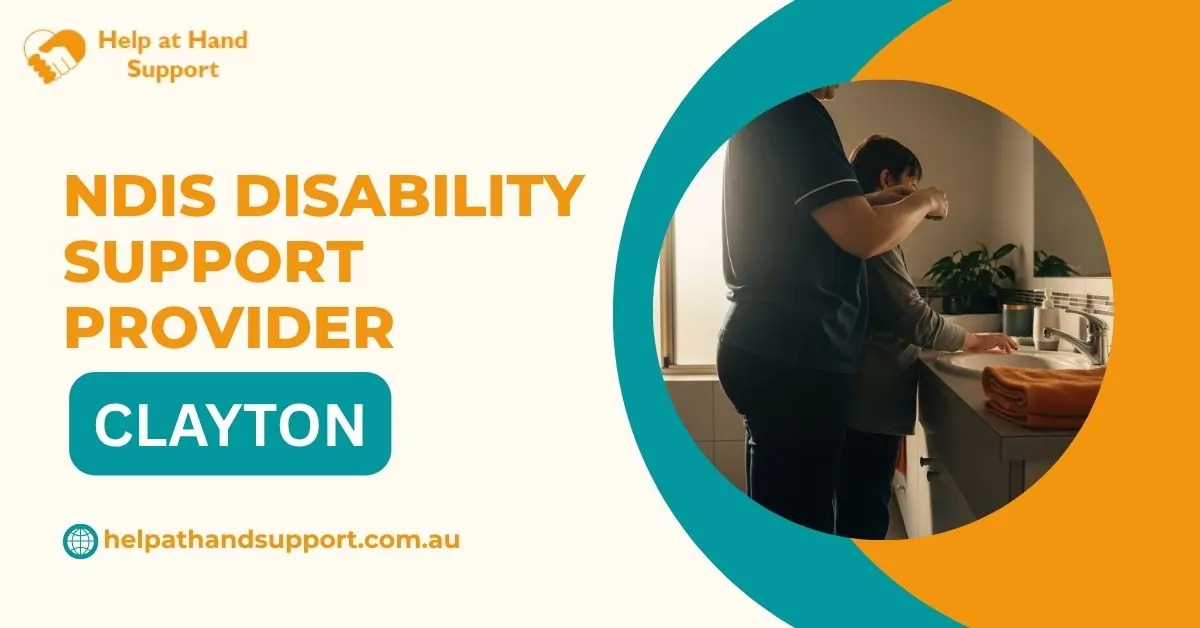
Help at Hand Support delivers structured support sessions in which disability support workers assist participants with routine activities such as personal care, household tasks, and community access. These structured sessions help participants develop consistent habits that improve independence over time.
An NDIS provider does not provide hospital care, clinical treatment, or medical diagnosis. The focus remains on practical support that improves day-to-day functioning in real environments.
What Does NDIS Support in Clayton Include
NDIS support in Clayton includes structured assistance across daily living, household routines, and community participation aligned with participant goals.
Support services include the following.
- Personal care routines such as hygiene and grooming
- Meal preparation and structured household tasks
- Community participation within Clayton environments
- Transport assistance aligned with NDIS plans
- Life skills development through routine-based training
- Appointment support and daily scheduling
Each service is delivered using consistent routines so participants can practise tasks repeatedly, improve their ability to complete them independently, and maintain stability in daily life.

How NDIS Support Is Delivered in Clayton
NDIS support in Clayton is delivered through structured sessions that combine preparation, guided practice, and real-world execution.
A support session follows a consistent and predictable structure.
- Preparing tasks at home, such as planning meals or writing shopping lists
- Practising tasks with guidance, such as cooking or organising items
- Travelling into the community using local transport, such as Clayton Station
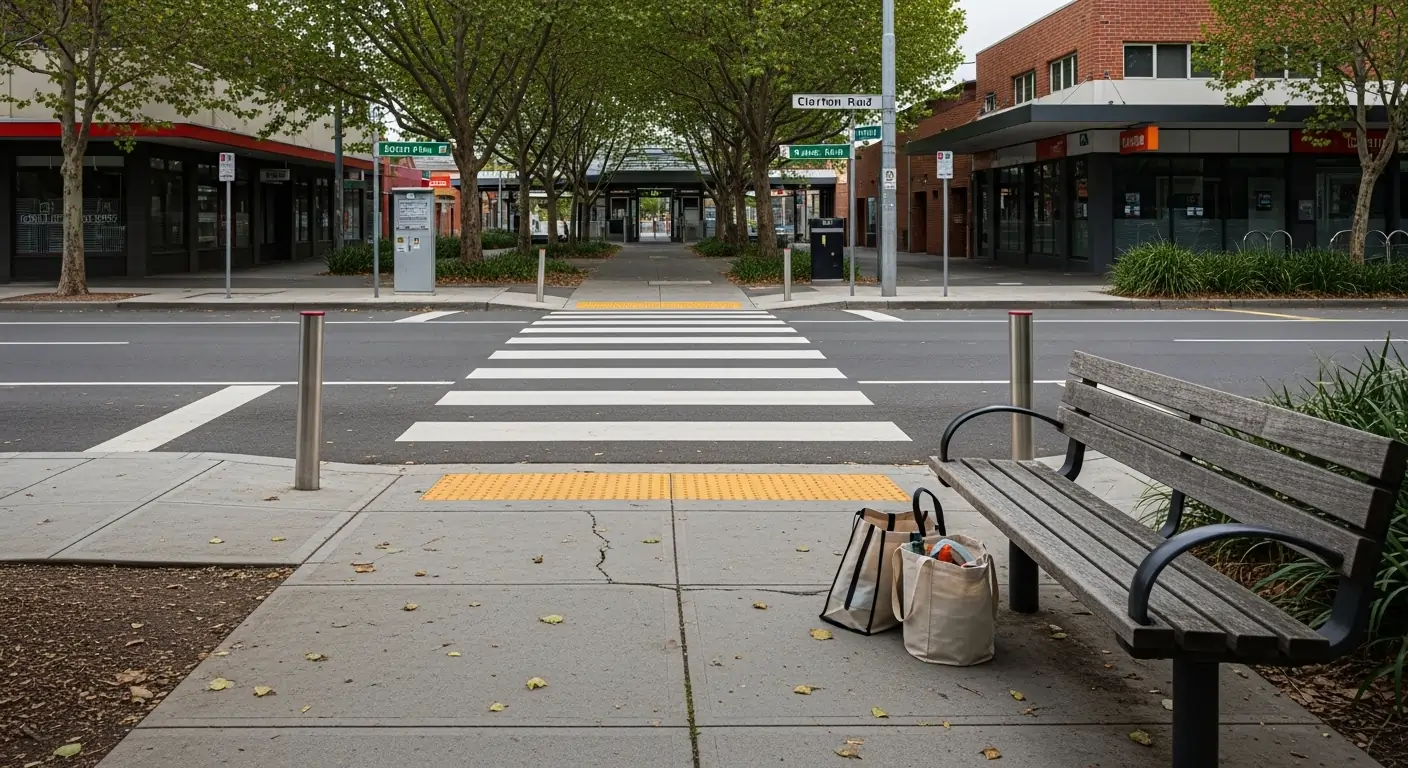
- Completing real activities such as shopping along Clayton Road
- Returning home to reinforce routines through repetition
Support is adjusted based on daily conditions, including fatigue, reduced energy, or mobility limitations, to ensure continuity even as capacity changes.
How NDIS Support Builds Independence
NDIS support builds independence by turning guided assistance into repeated actions that develop into stable daily habits.
Support workers use a progression approach in which participants move from guided assistance to supported participation and, eventually, to independent task completion. Repeating routines helps participants form habits that stabilise daily life and reduce reliance on others.
As participants gain experience in community settings, their confidence improves and their ability to engage increases safely. This process also helps reduce anxiety associated with unfamiliar environments.
Support remains consistent during periods of fatigue or low energy, ensuring participants maintain routine stability even when their capacity fluctuates.
NDIS Household Support Services Clayton
NDIS household support in Clayton helps participants maintain a safe, organised home while developing essential daily living skills.
Household support includes the tasks listed below.
- Cleaning and home organisation
- Laundry and clothing routines
- Meal planning and preparation
- Grocery shopping and supply management
- Structuring daily routines within the home
Participants are encouraged to actively take part in tasks, which helps build confidence and improves their ability to manage responsibilities independently over time.
Developing these skills within the home environment prepares participants for broader community engagement.
Community Participation Support in Clayton
Community participation support in Clayton helps participants engage with local environments safely while building confidence and independence.
Support is delivered in real locations across Clayton, including:
- Monash Medical Centre for appointments and health visits
- Clayton Road shopping precinct for errands and social interaction
- Clayton Train Station for travel training and navigation
- Local parks and community spaces within the City of Monash
Participants practise real-world activities such as interacting with others, navigating shops, and using public transport. Repeated exposure to these environments helps reduce uncertainty, improve social confidence, and support independent participation in community life.
Transport Support Under NDIS in Clayton
NDIS transport support in Clayton provides safe, structured travel, enabling participants to attend essential activities and build travel skills.
Transport support includes the services listed below.
- Travel to medical and allied health appointments
- Transport to community participation activities
- Assistance with shopping and essential errands
- Support using public transport networks such as trains and buses
Transport is integrated into broader support routines, so participants not only reach their destinations but also learn how to navigate travel independently over time.
All transport support is planned and aligned with participant goals and funding categories.

Conditions Supported by Help at Hand Support
NDIS support in Clayton is delivered to participants with conditions that require structured assistance to manage daily living and build independence.
Supported conditions include the following.
- Autism Spectrum Disorder (ASD)
- Intellectual Disability
- Cerebral Palsy
- Multiple Sclerosis (MS)
- Motor Neuron Disease (MND)
- Spinal Cord Injuries
- Psychosocial Disability
- Schizophrenia
- Global Developmental Delay
- Down Syndrome
- Sensory Disabilities, including vision and hearing impairment
Support is adapted to each participant’s functional capacity, ensuring consistent and safe service delivery.
Why Choose Help at Hand Support in Clayton
Help at Hand Support delivers structured, consistent, and locally grounded NDIS services focused on measurable outcomes in independence.
Participants choose Help at Hand Support for the reasons listed below.
- Structured support that promotes routine development
- Services aligned with NDIA-approved participant goals
- Consistent support workers who build familiarity and trust
- Strong local knowledge of Clayton and the surrounding areas
- Focus on developing independence through practical skills
- Full compliance with NDIS Quality and Safeguards Commission standards
Consistency in support delivery helps participants achieve long-term progress, maintain stable routines, and build independence that continues beyond individual sessions.
Contact us today clicking here or call us on 03 8699 8211 to schedule an appointment for a care consultation to discuss your specific needs.
Frequently Asked Questions
How does NDIS support work in Clayton?
NDIS support works by delivering structured, routine-based assistance at home and in community environments to help participants build independence.
What daily tasks are included in NDIS support?
NDIS support includes personal care, meal preparation, household tasks, community participation, and transport aligned with the participant’s plan.
Can support workers help build routines?
Support workers help participants build routines through repetition, guided practice, and consistent scheduling.
How often is NDIS support provided?
NDIS support frequency depends on the participant’s approved plan and individual support needs.
What happens during a support session?
A support session includes planning tasks, guided participation, real-world activity, and routine reinforcement to improve independence.